English
 Español
 tiếng việt
 русский
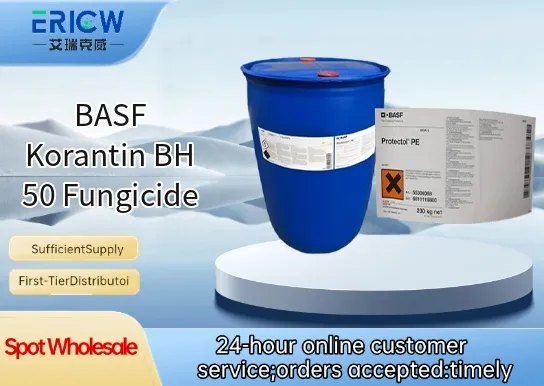
Broad-spectrum systemic and protective activity against key foliar and soil-borne fungal pathogens.
Combines two complementary active ingredients — benzovindiflupyr (250 g/L) and pyraclostrobin (250 g/L) — for enhanced disease control and resistance management.
Excellent rainfastness and leaf retention, supporting consistent performance under variable field conditions.
Flexible application timing — effective at pre- to post-infection stages across multiple crop growth stages.
Low phytotoxicity profile with favorable safety characteristics for integrated pest management (IPM) programs.
Cereal crops including wheat, barley, and oats for control of Septoria tritici blotch, rusts, and powdery mildew.
Maize (corn) targeting northern corn leaf blight, gray leaf spot, and southern rust.
Soybean production systems managing frogeye leaf spot, brown spot, and target spot.
Sugar beet cultivation for suppression of Cercospora leaf spot and powdery mildew.
Rice fields where blast and sheath blight are prevalent concerns.
| Chemical Type | Strobilurin + SDHI fungicide (dual-mode-of-action) |
| Product Form | Concentrated suspension concentrate (SC) |
| Appearance | Off-white to light beige opaque suspension |
| Active Ingredients | Benzovindiflupyr (250 g/L) + Pyraclostrobin (250 g/L) |
| pH (1% aqueous solution) | 6.0 – 7.5 |
| Density (20°C) | Approx. 1.18–1.22 g/cm³ |
| Storage Stability | ≥ 24 months in original unopened container at 5–30°C |
| Compatibility | Compatible with most commonly used insecticides, herbicides, and foliar nutrients (tank-mix compatibility testing recommended) |
Q1: What is the primary mode of action of Korantin BH 50?
A: Korantin BH 50 is a broad-spectrum fungicide based on the active ingredient benzimidazole, acting primarily as a systemic inhibitor of β-tubulin polymerization, thereby disrupting fungal cell division and growth.
Q2: Which crop diseases is Korantin BH 50 most commonly used against?
A: It is widely applied to control key foliar and fruit diseases such as powdery mildew, grey mold (Botrytis), and various leaf spot pathogens in fruits, vegetables, and ornamental crops — particularly where resistance management strategies include benzimidazole-class actives.
Q3: Is Korantin BH 50 compatible with common tank-mix partners?
A: Yes, Korantin BH 50 generally exhibits good physical and chemical compatibility with many widely used insecticides, acaricides, and foliar fertilizers; however, field-specific compatibility testing is recommended prior to large-scale tank mixing.
Q4: How should Korantin BH 50 be stored to maintain stability and efficacy?
A: Store in original unopened containers in a cool, dry, well-ventilated area away from direct sunlight and incompatible materials; avoid freezing and prolonged exposure to high humidity or elevated temperatures.
Contact With Us:
E-mail: wangxingqiang@ericwchem.com
Have a Questions? Call Us:
Add:
Building A1, Jiete Industrial Park, Huangpu District, Guangzhou City, Guangdong Province, China