English
 Español
 tiếng việt
 русский
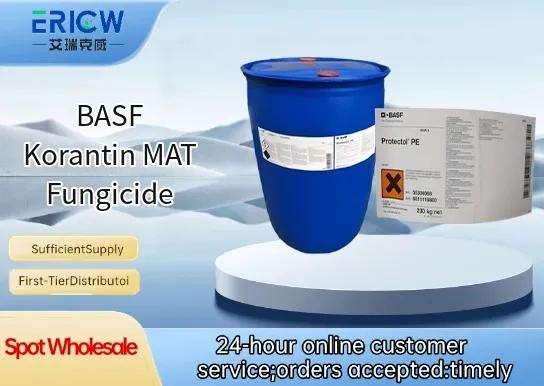
Advanced multi-site + systemic mode of action for robust, resistance-managed disease control.
Exceptional rainfastness and UV stability ensuring reliable performance under variable field conditions.
Broad-spectrum efficacy against key foliar and soil-borne fungal pathogens including Rhizoctonia, Fusarium, and Botrytis spp.
Low phytotoxicity profile, supporting safe use on sensitive crops and integrated pest management (IPM) programs.
Formulated for optimal tank-mix compatibility with major insecticides, herbicides, and plant growth regulators.
Protective and curative treatment in high-value horticulture (e.g., tomatoes, cucumbers, strawberries).
Disease management in open-field and protected vegetable production systems.
Seedling and transplant protection in nursery operations and greenhouse propagation.
Pre-harvest fungicide application in fruiting vegetables to extend post-harvest quality and shelf life.
| Chemical Type | Multi-active ingredient formulation (azoxystrobin + difenoconazole) |
| Product Form | Concentrated suspension (SC) |
| Appearance | Off-white to light beige suspension |
| Primary Applications | Foliar spray, drench, and seed treatment |
| Key Features | Resistance management tool with dual MoA; EU MRL-compliant |
| Benefits | Extended residual activity, improved crop vigor, and yield preservation |
| Storage Conditions | Store below 30°C in original sealed container; protect from frost and direct sunlight |
| Shelf Life | 24 months from date of manufacture under recommended storage |
Q1: What is the primary mode of action of Korantin MAT fungicide?
A: Korantin MAT is a multi-site contact fungicide that disrupts fungal cell membrane integrity and metabolic processes through broad-spectrum oxidative stress mechanisms. Its activity is not dependent on a single biochemical target, helping to minimize the risk of resistance development in sensitive pathogens.
Q2: Which types of formulations is Korantin MAT typically incorporated into?
A: Korantin MAT is widely used in aqueous suspension concentrates (SC), wettable powders (WP), and water-dispersible granules (WG). It demonstrates good compatibility with common formulation adjuvants and is especially valued for its stability in pH-neutral to mildly alkaline systems.
Q3: Is Korantin MAT suitable for use in integrated pest management (IPM) programs?
A: Yes — due to its multi-site mode of action and favorable environmental profile, Korantin MAT is well-suited as a resistance-management tool within IPM strategies. It can be alternated or tank-mixed with selective systemic fungicides to broaden spectrum and sustain long-term efficacy.
Q4: What are the key handling and safety considerations during formulation processing?
A: As with all active ingredients, appropriate engineering controls (e.g., local exhaust ventilation) and personal protective equipment (PPE) such as nitrile gloves and dust/mist respirators should be used during handling. Korantin MAT is not classified as highly toxic, but standard occupational hygiene practices for low-dust, low-volatility solids apply.
Contact With Us:
E-mail: wangxingqiang@ericwchem.com
Have a Questions? Call Us:
Add:
Building A1, Jiete Industrial Park, Huangpu District, Guangzhou City, Guangdong Province, China