English
 Español
 tiếng việt
 русский
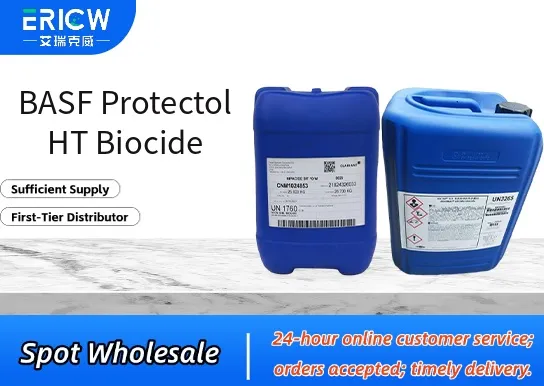
High thermal stability for effective microbial control in elevated-temperature industrial processes.
Broad-spectrum efficacy against bacteria, fungi, and algae, including resistant strains.
Low volatility and minimal odor, enhancing workplace safety and operator acceptance.
Compatible with common water treatment chemistries and polymer systems without destabilization.
Non-oxidizing mode of action, reducing corrosion risk in metal-containing systems.
Cooling water systems in power plants and HVAC installations operating at high temperatures.
Process water circuits in paper mills and textile manufacturing facilities.
Recirculating water systems in oil & gas production and refining operations.
Emulsion-based metalworking fluids requiring long-term microbiological stability.
Industrial preservative for water-based coatings, adhesives, and construction additives.
| Chemical Type | Heterocyclic biocide (active ingredient: 1,3,5-triazine derivative) |
| Product Form | Liquid concentrate |
| Appearance | Clear, pale yellow to amber liquid |
| pH (1% aqueous solution, 20°C) | 7.0 – 8.5 |
| Density (20°C) | 1.08 – 1.12 g/cm³ |
| Solubility in Water | Completely miscible |
| Storage Stability | ≥ 24 months in original sealed container at 5–30°C |
| Primary Applications | Industrial water treatment, metalworking fluids, emulsions, coatings |
Q1: What is the primary mode of action of BASF Protectol HT Biocide?
A: Protectol HT Biocide acts primarily through membrane disruption and interference with essential cellular metabolism in microorganisms, delivering broad-spectrum efficacy against bacteria, yeasts, and molds.
Q2: In which types of industrial formulations is Protectol HT Biocide commonly used?
A: It is widely applied in water-based industrial products such as metalworking fluids, latex paints, adhesives, sealants, and construction chemicals—particularly where long-term preservation and stability under varying pH and temperature conditions are required.
Q3: Is Protectol HT Biocide compatible with common thickeners and surfactants?
A: Yes, Protectol HT Biocide demonstrates good compatibility with a wide range of formulation ingredients, including nonionic and anionic surfactants, cellulose ethers, associative thickeners, and acrylic polymers—though compatibility testing under actual formulation conditions is recommended.
Q4: How does Protectol HT Biocide perform under elevated temperature or extended storage conditions?
A: Protectol HT Biocide is formulated for enhanced thermal and hydrolytic stability, maintaining preservative efficacy during prolonged storage and in applications involving moderate temperature fluctuations, making it suitable for demanding industrial environments.
Q5: What is the typical dosage range for effective microbial control?
A: Effective dosage generally ranges from 0.1% to 2% by weight of the final formulation, depending on microbial challenge level, pH, temperature, and presence of organic load—optimal concentration should be determined via challenge testing per ISO 11930 or equivalent protocols.
Contact With Us:
E-mail: wangxingqiang@ericwchem.com
Have a Questions? Call Us:
Add:
Building A1, Jiete Industrial Park, Huangpu District, Guangzhou City, Guangdong Province, China