English
 Español
 tiếng việt
 русский
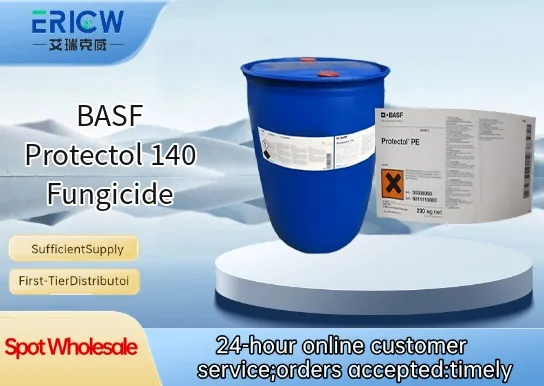
Broad-spectrum fungicidal activity against key saprophytic and pathogenic fungi, including Aspergillus, Penicillium, and Cladosporium species.
Low volatility and excellent stability in water-based formulations, ensuring long-term efficacy in stored products.
Non-oxidizing chemistry with minimal impact on substrate integrity—ideal for sensitive polymers and coatings.
Compatible with a wide range of industrial biocides and formulation additives, enabling flexible co-formulation strategies.
Registered for use in multiple global regions under stringent regulatory frameworks, supporting international supply chain compliance.
Preservation of water-based paints and architectural coatings during storage and application.
Protection of adhesives and sealants against fungal degradation in humid environments.
Stabilization of construction chemicals such as cementitious grouts, tile mortars, and waterproofing slurries.
In-can preservation of industrial cleaning concentrates and maintenance fluids.
Functional additive in wood protection systems for non-pressure-treated interior applications.
| Chemical Type | Isothiazolinone-based biocide (active ingredient: 1,2-benzisothiazol-3(2H)-one) |
| Product Form | Clear to pale yellow liquid |
| Appearance | Homogeneous, free-flowing liquid without sediment |
| pH (1% aqueous solution) | 6.0 – 8.0 |
| Density (20 °C) | 1.12 – 1.16 g/cm³ |
| Solubility in Water | Complete miscibility |
| Primary Applications | In-can preservation of water-based industrial and construction formulations |
| Key Features | Fungal-specific, low mammalian toxicity, no heavy metals |
Q1: What is the primary mode of action of BASF Protectol 140 Fungicide?
A: BASF Protectol 140 Fungicide functions as a broad-spectrum preventive and curative fungicide, primarily inhibiting fungal cell membrane synthesis through interference with ergosterol biosynthesis. Its active ingredient belongs to the triazole chemical class, providing systemic activity and residual protection in treated substrates.
Q2: In which types of industrial formulations is Protectol 140 commonly used?
A: Protectol 140 is widely incorporated into water-based industrial coatings, adhesives, sealants, construction materials (e.g., cementitious and gypsum-based products), and polymer dispersions where long-term resistance against mold, mildew, and saprophytic fungi is required under humid or damp conditions.
Q3: How stable is Protectol 140 in alkaline environments such as cementitious systems?
A: Protectol 140 demonstrates good compatibility and stability across a broad pH range, including moderately alkaline conditions typical of cement- and lime-based formulations. It maintains fungicidal efficacy without significant degradation during early curing stages, though prolonged exposure to highly alkaline media (>pH 12.5) may gradually reduce performance over time.
Q4: Is Protectol 140 suitable for use in interior applications requiring low-VOC compliance?
A: Yes — Protectol 140 is formulated as a low-volatility, non-aqueous liquid concentrate with negligible vapor pressure. When dosed at recommended levels, it contributes minimally to overall VOC content and supports compliance with major low-VOC regulatory frameworks for interior building products.
Contact With Us:
E-mail: wangxingqiang@ericwchem.com
Have a Questions? Call Us:
Add:
Building A1, Jiete Industrial Park, Huangpu District, Guangzhou City, Guangdong Province, China