English
 Español
 tiếng việt
 русский
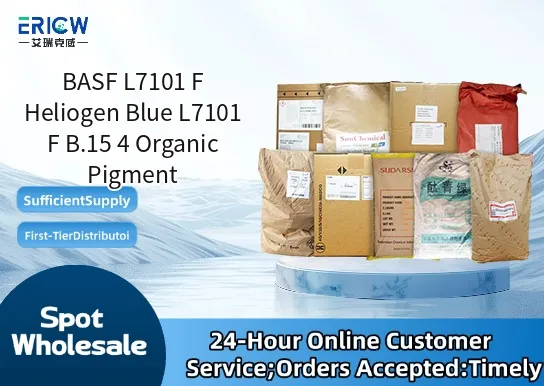
High chroma and clean greenish-blue shade with excellent lightfastness (ISO 105-B02, Grade 7–8).
Outstanding thermal stability up to 220 °C for demanding processing conditions.
Excellent dispersibility in both polar and non-polar media, including PVC, PS, ABS, and engineering plastics.
Good chemical resistance to acids, alkalis, and solvents typical in industrial ink and coating formulations.
Compliant with major global regulatory frameworks including REACH, RoHS, and FDA 21 CFR §178.3297 for food-contact applications (when used within specified limits).
Automotive interior and exterior plastic parts (e.g., dashboards, trim, grilles).
High-performance industrial coatings for metal and plastic substrates.
Packaging films and rigid containers requiring food-safe coloration.
Engineering thermoplastics such as polyamide (PA) and polybutylene terephthalate (PBT).
Specialty inks for flexible packaging and decorative laminates.
| Chemical Type | Phthalocyanine-based copper complex (CuPc) |
| Product Form | Free-flowing powder |
| Appearance | Intense greenish-blue granular powder |
| Primary Applications | Plastics, coatings, inks |
| Key Features | High tinctorial strength, excellent weather resistance, low migration |
| Benefits | Consistent batch-to-batch color, optimized for extrusion and injection molding |
| Particle Size (D50) | Approx. 0.08–0.12 µm (by laser diffraction) |
| Heat Resistance | ≥ 220 °C (10 min, air) |
Q1: What is the primary chemical class and pigment classification of L7101 F?
A: BASF L7101 F is a high-performance phthalocyanine-based organic pigment, classified as Pigment Blue 15:4 (PB15:4), known for its excellent blue shade, strong tinting strength, and balanced combination of weatherfastness and dispersibility.
Q2: In which types of coating and ink systems is L7101 F most commonly used?
A: L7101 F is widely employed in high-demand solvent-based and water-based industrial coatings, automotive refinishes, and packaging inks—particularly where good gloss retention, resistance to flocculation, and compatibility with acrylic and polyester resins are required.
Q3: How does the 'F' designation in L7101 F affect its performance characteristics?
A: The 'F' suffix indicates a specially engineered grade optimized for fine particle size distribution and enhanced surface treatment, resulting in improved dispersion stability, higher chroma, and better rheological behavior in demanding liquid systems compared to standard PB15:4 grades.
Q4: Is L7101 F suitable for applications requiring regulatory compliance in food-contact or toy materials?
A: L7101 F is not pre-approved for direct food-contact or toy applications under major global regulatory frameworks; users must conduct full formulation-level compliance assessments—including migration testing and regulatory review—based on final end-use conditions and applicable jurisdictional requirements.
Q5: What is the typical dosage range when using L7101 F in coating formulations?
A: Dosage depends on formulation requirements and desired opacity or chroma, but L7101 F is typically used at low concentrations—generally ranging from 0.1% to 2% by weight in the total pigment-binder system—to achieve optimal color strength and stability.
Contact With Us:
E-mail: wangxingqiang@ericwchem.com
Have a Questions? Call Us:
Add:
Building A1, Jiete Industrial Park, Huangpu District, Guangzhou City, Guangdong Province, China