English
 Español
 tiếng việt
 русский
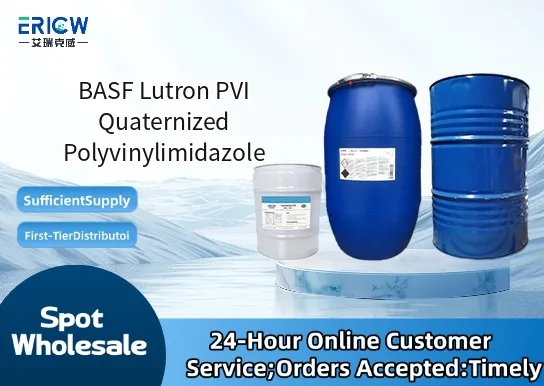
Highly effective cationic polymer with strong electrostatic binding to anionic substrates including hair, skin, and textile fibers.
Excellent substantivity and film-forming capability, delivering long-lasting conditioning and antistatic effects.
Water-soluble and stable across a broad pH range (pH 3–8), enabling formulation flexibility in rinse-off and leave-on products.
Low irritation potential and favorable toxicological profile, supporting mildness claims in personal care applications.
Non-volatile, non-foaming, and compatible with high levels of surfactants, silicones, and preservatives.
Conditioning agent in shampoos, conditioners, and hair masks for improved combability and reduced static.
Antistatic additive in fabric softeners and laundry detergents for synthetic and blended textiles.
Mildness enhancer and viscosity modifier in baby shampoos and sensitive-skin cleansers.
Deposit-control polymer in industrial water treatment formulations for scale and corrosion inhibition.
Binding agent in cosmetic wet wipes and cleansing pads for sustained active ingredient delivery.
| Chemical Type | Quaternized polyvinylimidazole (cationic homopolymer) |
| Product Form | Aqueous solution (~10–15% active content) |
| Appearance | Clear, slightly viscous, colorless to pale yellow liquid |
| pH (1% aqueous solution) | 5.0–6.5 |
| Primary Applications | Personal care conditioning, textile antistatic, industrial water treatment |
| Key Features | Cationic charge density > 3.5 meq/g, low molecular weight (~50–150 kDa) |
| Benefits | Enhanced deposition, reduced rinsing time, improved sensory feel, biodegradability support |
| Regulatory Compliance | Compliant with INCI, EU Cosmetics Regulation (EC) No 1223/2009, REACH registered |
| Common Compatible Systems | Suitability |
| Anionic surfactant systems (e.g., SLES, ALS) | Recommended – Forms stable complexes; optimal at ≤ 5% active loading |
| Nonionic emulsifiers (e.g., Ceteareth-20, Polysorbate 20) | Highly Recommended – No phase separation or viscosity loss |
| Dimethicone and amodimethicone dispersions | Suitable – Enhances silicone deposition without destabilization |
| Preservative systems (e.g., Phenoxyethanol, MIT-free blends) | Highly Recommended – No interference with antimicrobial efficacy |
Q1: What is the CAS Registry Number for BASF Lutron PVI Quaternized Polyvinylimidazole?
A: The CAS number is 111088-75-4 (generic for quaternized polyvinylimidazole derivatives); specific batch documentation is provided upon request per REACH compliance requirements.
Q2: What is the recommended usage level in rinse-off hair conditioners?
A: Typical use level ranges from 0.2% to 1.5% (as supplied solution) depending on desired substantivity and final product pH; efficacy peaks between 0.5–1.0% in standard SLES-based shampoos.
Q3: How does Lutron PVI compare to polyquaternium-6 or polyquaternium-10 in terms of substantivity and biodegradability?
A: Lutron PVI exhibits higher charge density than PQ-10 and faster adsorption kinetics than PQ-6; it also demonstrates >60% ready biodegradability (OECD 301B), exceeding typical PQ-6 performance under equivalent test conditions.
Q4: Is migration or extraction of residual monomer or quaternizing agent a concern in cosmetic applications?
A: No — rigorous purification ensures residual vinylimidazole < 10 ppm and residual alkyl halide < 5 ppm, well below ICH Q3C and EU Annex II limits; certified test reports available for each production lot.
Contact With Us:
E-mail: wangxingqiang@ericwchem.com
Have a Questions? Call Us:
Add:
Building A1, Jiete Industrial Park, Huangpu District, Guangzhou City, Guangdong Province, China