English
 Español
 tiếng việt
 русский
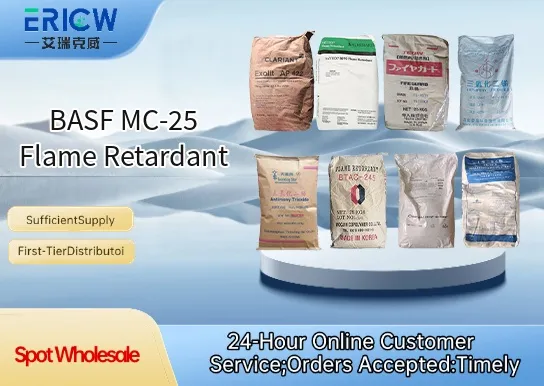
Halogen-free formulation for improved environmental and fire safety profile.
Excellent thermal stability suitable for high-temperature polymer processing.
Good compatibility with polyolefins, engineering thermoplastics, and elastomers.
Low smoke generation and reduced toxic gas emission during combustion.
Easy dispersion and consistent performance in masterbatch and compound applications.
Wire and cable insulation for low-smoke zero-halogen (LSZH) requirements.
Automotive interior components including dashboards and trim parts.
Electrical enclosures and housings for consumer electronics and industrial equipment.
Building and construction materials such as conduit, ducting, and ceiling tiles.
Flexible PVC and TPE compounds requiring UL 94 V-0 or V-1 rating.
| Chemical Type | Organophosphorus-based flame retardant |
| Product Form | Powder |
| Appearance | White to off-white free-flowing powder |
| Density (23 °C) | 1.45–1.55 g/cm³ |
| Decomposition Onset Temperature | ≥ 280 °C (TGA, 10 °C/min, air) |
| pH (1% aqueous suspension) | 6.5–7.5 |
| Moisture Content | ≤ 0.5 wt% |
| Key Compliance | RoHS compliant; REACH registered |
Q1: What types of polymers is BASF MC-25 Flame Retardant typically compatible with?
A: MC-25 is primarily designed for use in thermoplastic elastomers (TPEs), polyolefins (e.g., PP and PE), and certain engineering plastics where halogen-free flame retardancy is required. Compatibility should be verified through formulation testing, as performance may vary depending on polymer polarity, melt viscosity, and processing conditions.
Q2: How is MC-25 incorporated into polymer systems during compounding?
A: MC-25 is typically added during the melt compounding stage—either directly via side feeder or pre-blended with polymer pellets. It exhibits good thermal stability up to standard extrusion temperatures and disperses effectively under moderate shear. Pre-drying is generally not required, but storage under dry conditions is recommended to maintain handling consistency.
Q3: Does MC-25 affect the mechanical properties of the final compound?
A: When used at typical dosage levels, MC-25 generally maintains a favorable balance between flame retardancy and mechanical integrity. Some reduction in elongation at break or impact strength may occur depending on loading level and base resin—therefore, optimization of concentration and potential use of compatibilizers or reinforcing additives is advised during formulation development.
Q4: Is MC-25 suitable for applications requiring regulatory compliance for food contact or consumer safety?
A: MC-25 is not intended for direct food-contact applications unless specifically validated and approved under applicable regional regulations. Its suitability for consumer-facing products depends on end-use requirements, exposure conditions, and full regulatory assessment by the compounder or brand owner. BASF recommends consulting local regulatory guidance and conducting appropriate migration and toxicological evaluations where needed.
Contact With Us:
E-mail: wangxingqiang@ericwchem.com
Have a Questions? Call Us:
Add:
Building A1, Jiete Industrial Park, Huangpu District, Guangzhou City, Guangdong Province, China