English
 Español
 tiếng việt
 русский
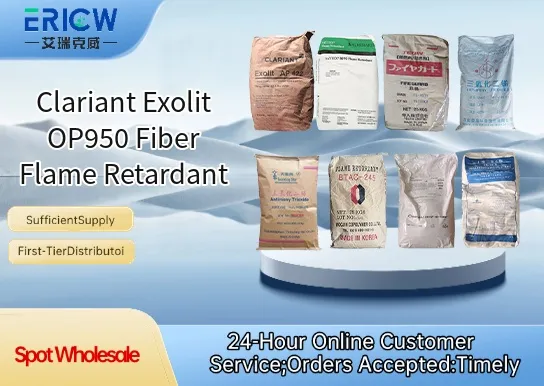
Halogen-free, phosphorus-based flame retardant specifically engineered for polyolefin fibers.
Excellent thermal stability up to 280 °C, enabling compatibility with high-temperature fiber extrusion processes.
Low volatility and minimal migration, ensuring long-term flame-retardant performance in end-use textiles.
Good dispersion in polypropylene (PP) and polyethylene (PE) matrices without compromising mechanical properties.
Complies with major fire safety standards including UL 94 V-0 (at appropriate loading) and EN 1186 for food-contact-adjacent applications.
Flame-retardant staple fibers for automotive interior textiles (seat covers, headliners, carpet backing).
Industrial filter media requiring compliance with DIN 4102 B1 or ASTM E84 Class A fire classifications.
Technical geotextiles used in tunnel linings and public infrastructure projects.
Nonwovens for protective workwear in low-risk industrial environments.
Carpet yarns for commercial and hospitality sectors meeting stringent building code requirements.
| Chemical Type | Organophosphorus compound (phosphinate-based) |
| Product Form | Free-flowing granules |
| Appearance | White to off-white granular solid |
| Density | ~1.4 g/cm³ (23 °C) |
| Melting Range | 275–285 °C |
| Moisture Content | <0.2 wt% (as delivered) |
| Primary Applications | Polypropylene and polyethylene fibers for technical textiles |
| Key Features | Halogen-free, low smoke, low toxicity, good processability |
Q1: What is the primary application domain for Exolit OP950?
A: Exolit OP950 is specifically engineered for flame retardancy in synthetic fibers—particularly polyamide (nylon) and polyester—used in technical textiles, protective apparel, and upholstery where low-additive loading and fiber integrity are critical.
Q2: How is Exolit OP950 incorporated into fiber production?
A: It is typically added during polymer melt compounding or directly into the spin-draw process via masterbatch or dry-blend methods. Its excellent thermal stability and compatibility allow for homogeneous dispersion without degrading fiber mechanical properties.
Q3: Does Exolit OP950 affect dyeability or color stability of treated fibers?
A: No—Exolit OP950 is designed to be non-interfering with standard dyeing processes (e.g., acid or disperse dyes) and shows minimal impact on hue, lightfastness, or batch-to-batch color consistency when properly dispersed.
Q4: Is Exolit OP950 suitable for use in fibers intended for skin-contact applications?
A: Yes—Exolit OP950 is halogen-free and formulated to meet stringent requirements for human-ecological safety in textile applications; it does not contain heavy metals, formaldehyde, or persistent organic pollutants, supporting compliance with major textile stewardship frameworks.
Contact With Us:
E-mail: wangxingqiang@ericwchem.com
Have a Questions? Call Us:
Add:
Building A1, Jiete Industrial Park, Huangpu District, Guangzhou City, Guangdong Province, China