English
 Español
 tiếng việt
 русский
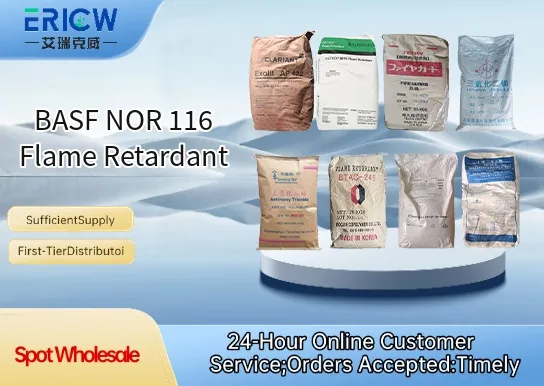
Halogen-free phosphorus-based flame retardant offering excellent fire safety performance.
Designed for high thermal stability, supporting processing temperatures up to 300 °C.
Low volatility and minimal migration, ensuring long-term flame-retardant efficacy in polymers.
Good compatibility with polyamide 6 and polyamide 66 matrices.
Supports UL 94 V-0 rating at appropriate loading levels in engineering thermoplastics.
Flame-retarded polyamide 6 (PA6) for automotive interior components.
Electrical and electronic housings requiring UL 94 V-0 compliance.
Connector parts and circuit breaker housings in low-voltage power distribution.
Industrial machinery components exposed to elevated operating temperatures.
Consumer appliance casings where halogen-free solutions are mandated.
| Chemical Type | Organophosphorus compound |
| Product Form | Free-flowing white granules |
| Appearance | Off-white to light beige granules |
| Density (23 °C) | ~1.45 g/cm³ |
| Melting Range | 280–300 °C |
| Moisture Content (max.) | 0.1 wt % |
| pH (1% aqueous dispersion) | 6.0–7.5 |
| Primary Applications | Polyamide 6 and PA66 compounds |
Q1: What is the primary chemical nature and mode of action of NOR 116?
A: NOR 116 is a reactive, phosphorus-based flame retardant designed for incorporation into polyurethane systems. It functions primarily through condensed-phase mechanisms, promoting char formation and reducing the release of flammable volatiles during thermal decomposition.
Q2: In which polyurethane applications is NOR 116 most commonly used?
A: NOR 116 is widely employed in flexible and semi-rigid PU foams for automotive seating, interior trim, and furniture—particularly where low smoke density and good aging performance are required alongside flame retardancy.
Q3: How does NOR 116 compare to additive flame retardants in terms of migration and long-term stability?
A: As a reactive component, NOR 116 becomes covalently bound within the PU polymer network, offering significantly improved resistance to blooming, leaching, and physical migration compared to conventional additive flame retardants—enhancing durability over time and under varying environmental conditions.
Q4: Is NOR 116 compatible with common PU catalysts and processing aids?
A: Yes, NOR 116 demonstrates broad compatibility with standard amine and metal-based catalysts, surfactants, and chain extenders used in conventional PU foam manufacturing processes, without adversely affecting cream time, rise profile, or final foam morphology.
Q5: What are typical dosage guidelines for achieving flame retardancy in flexible PU foam?
A: Dosage depends on formulation requirements and target fire performance, but NOR 116 is typically used at low concentrations—generally ranging from 0.1% to 2% by weight relative to polyol—to meet standard flammability classifications such as FMVSS 302 or DIN 75200.
Contact With Us:
E-mail: wangxingqiang@ericwchem.com
Have a Questions? Call Us:
Add:
Building A1, Jiete Industrial Park, Huangpu District, Guangzhou City, Guangdong Province, China