English
 Español
 tiếng việt
 русский
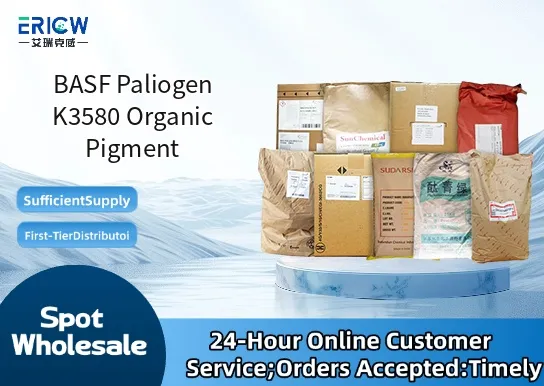
High thermal stability suitable for demanding processing conditions up to 300 °C.
Excellent lightfastness and weather resistance (DIN ISO 105-B02, Grade 7–8).
Outstanding chemical resistance to acids, alkalis, and solvents.
Strong tinting strength with high chroma and clean blue-shade red hue.
Good dispersibility in both polar and non-polar polymer systems.
Engineering plastics including polyamide (PA), polybutylene terephthalate (PBT), and polyphenylene sulfide (PPS).
Automotive interior and exterior plastic components requiring long-term color stability.
High-performance industrial coatings for metal and plastic substrates.
Specialty inks for packaging gravure and flexographic printing.
Color concentrates for masterbatch production in technical polymers.
| Chemical Type | Quinacridone derivative |
| Product Form | Free-flowing powder |
| Appearance | Violet-red free-flowing powder |
| Primary Applications | High-temperature plastics, automotive coatings, specialty inks |
| Key Features | Thermal stability, lightfastness, chemical resistance, high chroma |
| Particle Size (D50) | 0.08–0.12 µm (by laser diffraction) |
| Volatile Matter (105 °C, 2 h) | ≤ 0.5 wt-% |
| Residue on 45 µm Sieve | ≤ 0.1 wt-% |
Q1: What is the primary chemical class and typical hue of Paliogen K3580?
A: Paliogen K3580 is a high-performance perylene-based organic pigment, offering a clean, bluish red shade with excellent chroma and strong tinting strength. Its molecular structure provides inherent stability against heat, light, and solvents.
Q2: In which polymer systems is Paliogen K3580 most commonly processed?
A: It demonstrates excellent dispersibility and thermal stability in engineering thermoplastics such as polyamide (PA6, PA66), polybutylene terephthalate (PBT), and polyethylene terephthalate (PET), especially in applications requiring high-temperature processing and long-term color retention.
Q3: How does Paliogen K3580 perform under outdoor exposure conditions?
A: Due to its robust perylene backbone, Paliogen K3580 delivers outstanding lightfastness and weather resistance—particularly when compounded in stabilized polymer matrices—making it suitable for demanding exterior applications where color permanence is critical.
Q4: Is Paliogen K3580 suitable for food-contact or regulatory-sensitive applications?
A: Paliogen K3580 is not certified for direct food-contact use. It is intended for industrial and technical applications where regulatory compliance focuses on general safety and performance—not migration or food-simulant testing. Always consult BASF’s latest regulatory documentation for specific end-use approvals.
Q5: What is the recommended dosage range in polymer masterbatches?
A: Typical dosage ranges from 0.1% to 2% by weight, depending on the desired shade intensity, polymer type, and processing conditions. Optimal dispersion is achieved using standard high-shear compounding equipment, and dosage should be adjusted based on formulation-specific trials.
Contact With Us:
E-mail: wangxingqiang@ericwchem.com
Have a Questions? Call Us:
Add:
Building A1, Jiete Industrial Park, Huangpu District, Guangzhou City, Guangdong Province, China