English
 Español
 tiếng việt
 русский
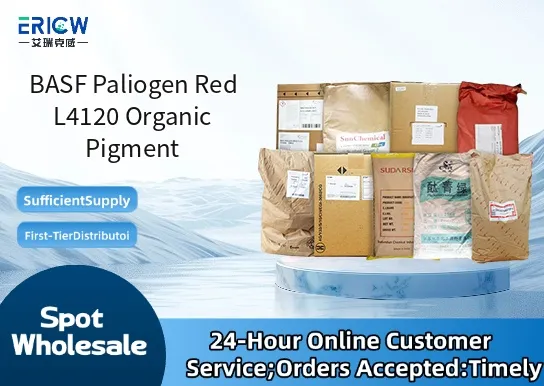
High thermal stability suitable for engineering plastics processing up to 300 °C.
Excellent lightfastness and weather resistance (Xenon fade rating ≥7 per ISO 105-B02).
Outstanding chemical resistance to acids, alkalis, and solvents commonly used in industrial coatings.
Strong tinctorial strength and clean bluish-red shade with high chroma.
Good dispersibility in polar and non-polar polymer matrices without requiring surface treatment.
Automotive exterior coatings requiring long-term color retention.
Engineering thermoplastics including polyamide (PA), polybutylene terephthalate (PBT), and polycarbonate (PC).
High-performance industrial coatings for metal and plastic substrates.
Plastic packaging films where regulatory compliance and thermal stability are critical.
Masterbatches for injection-molded and extruded technical parts.
| Chemical Type | Perylene derivative (C.I. Pigment Red 179) |
| Product Form | Free-flowing powder |
| Appearance | Deep bluish-red powder |
| Primary Applications | High-end coatings, engineering plastics, masterbatches |
| Key Features | Thermal stability, lightfastness, chemical resistance |
| Regulatory Status | Compliant with EU REACH; not listed under SVHC candidate list |
| Recommended Processing Temperature Range | Up to 300 °C (short-term) |
| Particle Size (D50) | Approx. 0.1–0.2 µm (by laser diffraction) |
Q1: What are the key performance advantages of Paliogen Red L4120 compared to conventional red organic pigments?
A: Paliogen Red L4120 offers exceptional thermal stability and outstanding lightfastness, making it particularly suitable for high-temperature processing applications such as engineering plastics compounding and automotive coatings. Its high tinctorial strength and clean bluish-red shade also support excellent color consistency and minimal batch-to-batch variation.
Q2: Is Paliogen Red L4120 suitable for use in food-contact plastics or packaging inks?
A: Paliogen Red L4120 is not certified for direct food contact applications. It is intended for industrial and technical uses including automotive, construction, and general-purpose plastics and coatings. Formulators requiring food-contact compliance should consult BASF’s portfolio of approved pigments and verify suitability against applicable regional regulations.
Q3: How does Paliogen Red L4120 perform in polyolefin systems like PP and PE?
A: This pigment demonstrates good dispersibility and thermal stability in polyolefins, especially when processed at typical extrusion temperatures. It maintains color integrity during melt processing and shows low tendency toward blooming or plate-out, supporting robust performance in injection-molded and blow-molded parts.
Q4: What types of dispersion media or milling aids are typically recommended for optimal dispersion of Paliogen Red L4120?
A: For liquid systems, non-ionic surfactants and polymeric dispersants are commonly effective. In masterbatches, carrier resins with compatible polarity—such as EVA or functionalized polyolefins—are frequently used. Optimal dispersion conditions depend on equipment type and formulation matrix, so lab-scale trials are recommended to fine-tune processing parameters.
Contact With Us:
E-mail: wangxingqiang@ericwchem.com
Have a Questions? Call Us:
Add:
Building A1, Jiete Industrial Park, Huangpu District, Guangzhou City, Guangdong Province, China