English
 Español
 tiếng việt
 русский
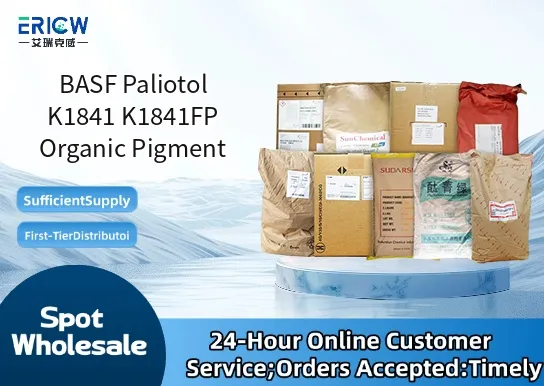
High chroma yellow shade with excellent brightness and clean hue.
Outstanding thermal stability suitable for high-temperature processing up to 280 °C.
Good lightfastness (ISO 105-B02, Grade 7–8) and weather resistance in demanding outdoor applications.
Excellent dispersibility in both solvent-based and water-based systems.
Low migration tendency in PVC, polyolefins, and styrenic polymers.
Automotive coatings (OEM and refinish).
Engineering plastics including ABS, PS, and PC blends.
General-purpose inks for packaging and publication gravure and flexo printing.
Masterbatches for polypropylene (PP) and polyethylene (PE) films.
High-performance industrial coatings requiring color consistency and durability.
| Chemical Type | Azo pigment (disazo) |
| Product Form | Free-flowing powder |
| Appearance | Yellow to orange-red fine powder |
| Primary Applications | Plastics, coatings, inks |
| Key Features | Thermally stable, low migration, high tinctorial strength |
| Benefits | Consistent color reproduction, easy dispersion, broad compatibility |
| Regulatory Compliance | REACH registered; compliant with EU Directive 2002/72/EC for food-contact plastics (subject to specific migration limits) |
Q1: What is the primary chemical class and structural characteristic of Paliotol K1841/K1841FP?
A: Paliotol K1841 and its free-flowing variant K1841FP belong to the quinacridone class of high-performance organic pigments, characterized by excellent molecular planarity and strong intramolecular hydrogen bonding, which contribute to their outstanding lightfastness, weather resistance, and thermal stability.
Q2: How does the K1841FP grade differ from standard K1841 in processing performance?
A: K1841FP is a specially engineered free-flowing version with optimized particle surface treatment, offering improved dispersibility in high-shear compounding processes and enhanced handling characteristics—such as reduced dusting and better bulk flow—without compromising the inherent coloristic or durability properties of the base pigment.
Q3: In which polymer systems is Paliotol K1841/K1841FP most commonly used, and what are key processing considerations?
A: It is widely applied in engineering thermoplastics—including polyolefins, polyesters, and polycarbonates—where high-temperature stability and color consistency are critical. Optimal dispersion typically requires melt compounding at temperatures above 200 °C; pre-conditioning (e.g., drying) is recommended for hygroscopic resins to prevent agglomeration or surface defects.
Q4: Is Paliotol K1841FP suitable for applications requiring regulatory compliance for food contact or toys?
A: While Paliotol K1841FP is not classified as a heavy-metal-containing pigment and meets general purity requirements for many regulated markets, formal compliance depends on the final formulation, application conditions, and applicable regional regulations. Customers must conduct full regulatory assessment—including migration testing where required—and consult BASF’s latest regulatory documentation for specific end-use approvals.
Contact With Us:
E-mail: wangxingqiang@ericwchem.com
Have a Questions? Call Us:
Add:
Building A1, Jiete Industrial Park, Huangpu District, Guangzhou City, Guangdong Province, China