English
 Español
 tiếng việt
 русский
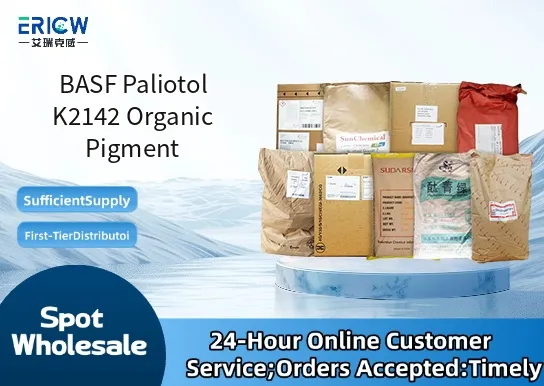
High chroma and excellent color strength for vivid, consistent red-orange shades.
Outstanding thermal stability up to 280 °C, suitable for demanding polymer processing conditions.
Good lightfastness and weather resistance in outdoor applications.
Low volatility and minimal migration in PVC, polyolefins, and engineering plastics.
Free-flowing powder form with excellent dispersibility in organic media and polymer melts.
Polyvinyl chloride (PVC) profiles, cables, and flooring.
Polyolefin fibers and injection-molded automotive interior parts.
Engineering plastics including ABS and polycarbonate blends.
Masterbatches for color concentrates in packaging films and containers.
Coatings for industrial and architectural applications requiring durable red-orange hues.
| Chemical Type | Quinacridone derivative |
| Product Form | Free-flowing fine powder |
| Appearance | Red-orange powder |
| Primary Applications | PVC, polyolefins, engineering plastics, masterbatches, coatings |
| Key Features | High thermal stability, low migration, excellent dispersion |
| Benefits | Consistent batch-to-batch color, high processability, long-term color retention |
| Recommended Processing Temperature Range | Up to 280 °C |
| Lightfastness (ISO 105-B02) | 7–8 (on blue wool scale) |
Q1: What is the primary chemical class and typical hue profile of Paliotol K2142?
A: Paliotol K2142 is a high-performance quinacridone-based organic pigment, offering strong violet-red to bluish-red shades with excellent chroma, transparency, and clean undertones—commonly selected for premium decorative and industrial coatings requiring color fidelity.
Q2: Is Paliotol K2142 suitable for use in automotive OEM or refinish coatings?
A: Yes—Paliotol K2142 is engineered for demanding applications including automotive OEM basecoats and high-solids refinish systems, where it delivers outstanding lightfastness, thermal stability during curing, and resistance to common solvents and acid catalysts used in crosslinking processes.
Q3: How does Paliotol K2142 perform in weathering and UV exposure compared to conventional red pigments?
A: As a quinacridone derivative, Paliotol K2142 exhibits significantly enhanced UV stability and long-term outdoor durability versus many azo or anthraquinone reds—demonstrating superior resistance to fading, chalking, and gloss loss in accelerated weathering tests and real-world exposure.
Q4: What dispersion characteristics should formulators expect when incorporating Paliotol K2142 into solventborne and waterborne systems?
A: Paliotol K2142 is supplied in a readily dispersible form optimized for both solventborne and waterborne architectures. It achieves fine particle size distribution and stable rheology with standard polymeric dispersants or surfactant systems—typically requiring moderate shear energy and showing good compatibility with acrylic, polyester, and alkyd resins.
Q5: Can Paliotol K2142 be used in food-contact coatings or other regulated applications?
A: Paliotol K2142 is not approved for direct food-contact applications under major global regulatory frameworks. It is intended for industrial, architectural, and automotive coatings where regulatory compliance focuses on non-food-related performance and safety requirements.
Contact With Us:
E-mail: wangxingqiang@ericwchem.com
Have a Questions? Call Us:
Add:
Building A1, Jiete Industrial Park, Huangpu District, Guangzhou City, Guangdong Province, China