English
 Español
 tiếng việt
 русский
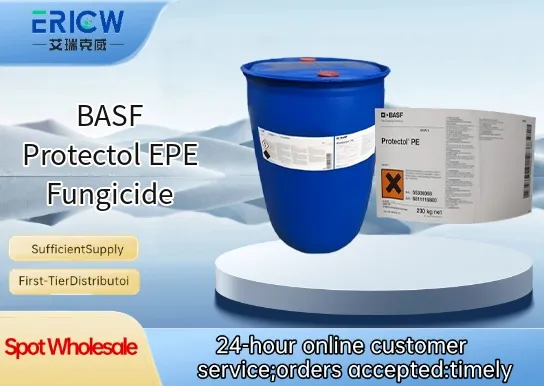
Highly effective broad-spectrum fungicidal activity against key wood-rotting and stain fungi, including Coniophora, Serpula, and Trametes species.
Excellent leach resistance due to strong binding to cellulose and lignin in wood substrates.
Low volatility and non-systemic mode of action ensure long-term protection without redistribution in treated materials.
Compatible with common wood preservative formulations and co-biocides for synergistic performance.
Meets stringent environmental and occupational safety requirements under EU Biocidal Products Regulation (BPR) for use in professional wood preservation.
Pressure-treated softwood for outdoor construction (e.g., decking, fencing, utility poles).
Preservation of engineered wood products including laminated veneer lumber (LVL) and glued laminated timber (glulam).
Protection of structural timber in above-ground and ground-contact applications per EN 335 classification.
Formulation component in industrial wood preservatives for factory-based treatment systems.
Supplemental biocide in coatings and sealants for timber cladding and façade elements.
| Chemical Type | Organotin compound (tributyltin oxide derivative) |
| Product Form | Liquid concentrate (oil-in-water emulsion) |
| Appearance | Opaque white to off-white emulsion |
| pH (1% aqueous solution) | 6.5 – 7.5 |
| Active Ingredient Content | ≥ 20% w/w as tributyltin oxide equivalent |
| Density (20 °C) | 1.02 – 1.06 g/cm³ |
| Solubility in Water | Partially miscible; forms stable emulsion |
| Primary Applications | Wood preservation (fungicidal protection only) |
Q1: What is the primary mode of action of Protectol EPE Fungicide?
A: Protectol EPE functions as a broad-spectrum preservative with fungistatic and bacteriostatic activity, primarily inhibiting key enzymatic processes essential for microbial growth and reproduction in polymer systems.
Q2: In which types of polymer systems is Protectol EPE most commonly used?
A: It is widely applied in water-based polymer dispersions, including acrylics, styrene-acrylics, and vinyl acetate copolymers—particularly where long-term storage stability and resistance to spoilage during manufacturing or end-use are critical.
Q3: How does Protectol EPE perform under varying pH conditions?
A: Protectol EPE demonstrates good stability and efficacy across a typical pH range of 4–9, making it suitable for many industrial emulsion formulations without requiring extensive pH adjustment.
Q4: Is Protectol EPE compatible with common co-biocides and formulation additives?
A: Yes—it is generally compatible with isothiazolinones, formaldehyde releasers, and other non-oxidizing preservatives, and shows good tolerance toward surfactants, thickeners, and defoamers commonly used in polymer dispersions.
Q5: What is the recommended dosage range for effective preservation?
A: Dosage depends on formulation requirements and microbial challenge level, but it is typically used at low concentrations—generally ranging from 0.1% to 2% by weight of the final dispersion—to achieve robust protection without compromising physical properties.
Contact With Us:
E-mail: wangxingqiang@ericwchem.com
Have a Questions? Call Us:
Add:
Building A1, Jiete Industrial Park, Huangpu District, Guangzhou City, Guangdong Province, China