English
 Español
 tiếng việt
 русский
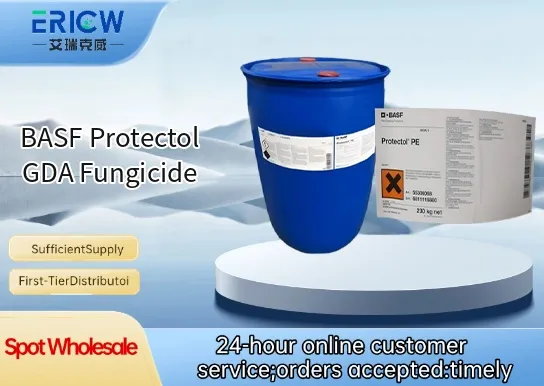
Broad-spectrum efficacy against key wood-decay and stain fungi, including Aureobasidium pullulans, Cladosporium spp., and Coniophora puteana.
Low-volatility, water-based formulation ensures reduced environmental impact and improved workplace safety during handling and application.
Excellent leach resistance due to strong binding affinity to cellulose and lignin, providing long-term protection in exterior and high-moisture environments.
Compatible with common wood preservative systems and co-formulatable with biocides targeting insects or bacteria for multi-protection solutions.
Non-staining and odor-neutral profile—ideal for applications where aesthetic integrity and indoor air quality are critical.
Protective treatment of solid softwood and hardwood used in outdoor construction (e.g., decking, cladding, fencing).
Preservation of engineered wood products such as cross-laminated timber (CLT), laminated veneer lumber (LVL), and I-joists.
Stabilization of wood-based panels—including OSB, MDF, and particleboard—for humid interior applications like bathrooms and kitchens.
Pre-treatment of wood components in prefabricated modular buildings and timber-frame structures.
Additive in coatings and impregnation systems for heritage timber restoration and conservation projects.
| Chemical Type | Organic fungicidal active based on guaiacol derivatives |
| Product Form | Aqueous solution |
| Appearance | Clear to slightly opalescent, pale yellow liquid |
| pH (1% aqueous solution) | 6.5 – 7.5 |
| Density (20 °C) | 1.02 – 1.06 g/cm³ |
| Solubility in Water | Completely miscible |
| Primary Applications | Wood preservation, fungal stain control, and decay inhibition in structural and decorative timber |
| Key Features | Non-toxic to humans at recommended use levels, EU Biocidal Products Regulation (BPR) compliant, non-corrosive to metals |
Q1: What is the primary mode of action of Protectol GDA?
A: Protectol GDA functions as a broad-spectrum fungistatic agent, primarily inhibiting fungal growth through interference with essential cellular metabolic processes. Its efficacy is particularly notable against molds and yeasts commonly encountered in water-based industrial systems.
Q2: In which types of formulations is Protectol GDA typically used?
A: Protectol GDA is widely incorporated into water-based industrial coatings, adhesives, sealants, construction chemicals, and textile auxiliaries. It is especially suited for applications requiring long-term protection against microbial spoilage during storage and in-service use.
Q3: Is Protectol GDA compatible with common preservative systems?
A: Yes, Protectol GDA demonstrates good compatibility with many conventional biocides and preservatives, including isothiazolinones and benzisothiazolinone derivatives. Synergistic effects may be observed in certain multi-active combinations, though compatibility testing under actual formulation conditions is recommended.
Q4: How should Protectol GDA be added to formulations?
A: Protectol GDA is typically added during the final stages of formulation, preferably at ambient to moderately elevated temperatures (up to 40 °C), with gentle mixing to ensure uniform dispersion. It is stable under neutral to mildly alkaline pH conditions but may undergo reduced efficacy in strongly acidic environments.
Q5: What safety and handling considerations apply to Protectol GDA?
A: As with all industrial biocides, appropriate personal protective equipment (PPE) — including gloves and eye protection — should be worn during handling. The product should be stored in its original container in a cool, dry, well-ventilated area away from direct sunlight and incompatible materials. Full safety information is provided in the Safety Data Sheet (SDS).
Contact With Us:
E-mail: wangxingqiang@ericwchem.com
Have a Questions? Call Us:
Add:
Building A1, Jiete Industrial Park, Huangpu District, Guangzhou City, Guangdong Province, China