English
 Español
 tiếng việt
 русский
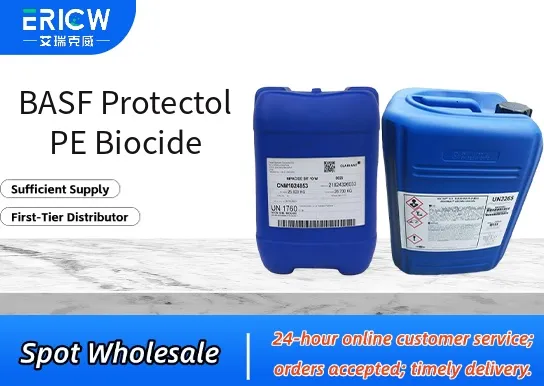
Highly effective broad-spectrum biocide against bacteria, fungi, and algae in water-based polymer emulsions.
Excellent compatibility with acrylic, styrene-butadiene, and vinyl acetate-based emulsions without destabilizing colloidal systems.
Low volatility and non-volatile residue profile, ensuring long-term preservation during storage and processing.
pH-stable performance across a wide range (pH 4–10), maintaining efficacy in diverse formulation environments.
REACH-compliant and registered under the EU Biocidal Products Regulation (BPR) for industrial preservative use.
Preservation of aqueous polymer emulsions used in architectural coatings.
Protection of binders in adhesives and sealants during manufacturing and shelf life.
In-can stabilization of waterborne industrial maintenance paints and primers.
Microbiological control in textile sizing formulations containing synthetic emulsions.
Preservation of construction chemicals such as cementitious tile adhesives and grouts.
| Chemical Type | Isothiazolinone-based biocide blend |
| Product Form | Aqueous solution |
| Appearance | Clear, pale yellow liquid |
| Primary Applications | In-can preservation of water-based polymer emulsions |
| Key Features | Broad-spectrum, low-odor, non-oxidizing |
| Benefits | Extended shelf life, minimal impact on film formation, easy handling |
| Storage Temperature | 5–30 °C (recommended) |
| Shelf Life | 24 months in original unopened container |
Q1: What is the primary function of BASF Protectol PE Biocide in polymer applications?
A: BASF Protectol PE Biocide is a preservative specifically developed to inhibit microbial growth—including bacteria, yeasts, and molds—in water-based polymer dispersions and emulsions, helping to maintain product integrity and shelf life during storage and processing.
Q2: Is Protectol PE Biocide suitable for use in food-contact polymer systems?
A: Protectol PE Biocide is not intended for direct food-contact applications unless explicitly approved under applicable regulatory frameworks. Its suitability for indirect food-contact scenarios depends on final formulation assessment, migration evaluation, and compliance with regional requirements—consult BASF technical support for case-specific guidance.
Q3: How should Protectol PE Biocide be incorporated into a polymer dispersion?
A: It is typically added during the final stage of production, after cooling, under gentle agitation to ensure uniform distribution. Compatibility and stability should be verified in the target system, as performance may vary depending on pH, ionic strength, and surfactant composition.
Q4: Does Protectol PE Biocide remain effective after film formation or drying of the polymer?
A: No—Protectol PE Biocide is designed to protect the liquid-phase formulation during storage and handling. Once the polymer film dries or cures, the biocide is no longer active in the solid matrix and does not provide long-term antimicrobial protection to the final dried film.
Q5: What are key handling and safety considerations when working with this biocide?
A: As with all industrial biocides, appropriate personal protective equipment (PPE) such as gloves and eye protection should be worn during handling. Avoid inhalation of mists or prolonged skin contact. Refer to the Safety Data Sheet (SDS) for detailed toxicological information, first-aid measures, and disposal recommendations.
Contact With Us:
E-mail: wangxingqiang@ericwchem.com
Have a Questions? Call Us:
Add:
Building A1, Jiete Industrial Park, Huangpu District, Guangzhou City, Guangdong Province, China