English
 Español
 tiếng việt
 русский
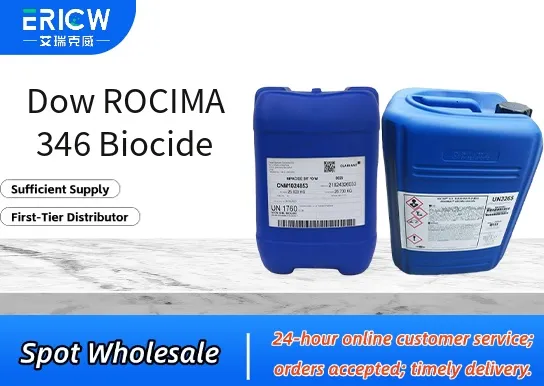
Broad-spectrum efficacy against bacteria, fungi, and algae in water-based systems.
Stable performance across a wide pH range (pH 4–10) and compatible with common industrial additives.
Low foaming formulation suitable for high-shear and recirculating cooling water applications.
Non-oxidizing chemistry that avoids corrosion concerns associated with chlorine or bromine-based biocides.
Designed for continuous or slug dosing in closed-loop and open-loop industrial water systems.
Industrial cooling water systems (e.g., HVAC, power generation, manufacturing).
Process water circuits in paper mills and textile finishing operations.
Recirculating water used in metalworking fluid sumps and machining centers.
Water-based coatings, adhesives, and construction chemical formulations.
Oilfield produced water handling and injection water treatment systems.
| Chemical Type | Isothiazolinone-based biocide (mixture of 5-chloro-2-methyl-4-isothiazolin-3-one and 2-methyl-4-isothiazolin-3-one) |
| Product Form | Liquid concentrate |
| Appearance | Clear, pale yellow to amber liquid |
| pH (as supplied) | 2.5–4.5 |
| Density (20 °C) | 1.08–1.12 g/cm³ |
| Solubility | Miscible with water in all proportions |
| Primary Applications | Cooling water, process water, metalworking fluids, water-based formulations |
| Key Features | Broad-spectrum, non-oxidizing, low-foaming, pH-stable |
Q1: What is the primary mode of action of Dow ROCIMA 346 Biocide?
A: Dow ROCIMA 346 Biocide functions primarily as a broad-spectrum preservative through disruption of microbial cell membranes and interference with essential metabolic processes, effectively controlling bacteria, yeasts, and molds in industrial formulations.
Q2: In which types of formulations is Dow ROCIMA 346 Biocide typically used?
A: It is commonly employed in water-based industrial products such as metalworking fluids, latex paints, adhesives, construction chemicals, and cleaning concentrates—especially where long-term microbial stability and compatibility with anionic and nonionic surfactants are required.
Q3: Is Dow ROCIMA 346 Biocide compatible with common formulation ingredients?
A: Yes, it demonstrates good compatibility with many thickeners, defoamers, corrosion inhibitors, and surfactants found in industrial systems. However, compatibility testing under actual formulation conditions is recommended due to potential interactions with highly reactive or oxidizing components.
Q4: How should Dow ROCIMA 346 Biocide be added to a formulation?
A: It is generally added during the cool-down phase or post-emulsification stage to minimize thermal degradation. For optimal dispersion and efficacy, it should be introduced with mild agitation and after pH adjustment, as performance can be influenced by system acidity or alkalinity.
Q5: What safety and handling considerations apply to Dow ROCIMA 346 Biocide?
A: As with all industrial biocides, appropriate personal protective equipment—including gloves, eye protection, and adequate ventilation—should be used during handling. Refer to the Safety Data Sheet (SDS) for detailed toxicological information, first-aid measures, and disposal guidance.
Contact With Us:
E-mail: wangxingqiang@ericwchem.com
Have a Questions? Call Us:
Add:
Building A1, Jiete Industrial Park, Huangpu District, Guangzhou City, Guangdong Province, China