English
 Español
 tiếng việt
 русский
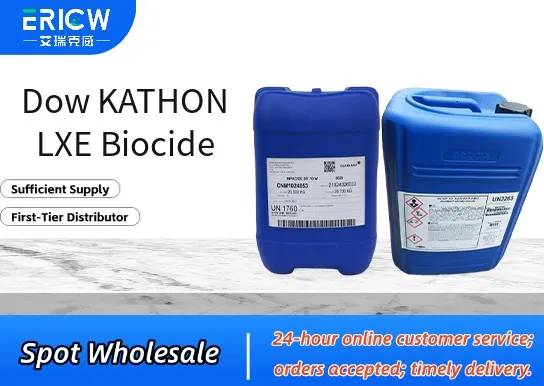
Broad-spectrum efficacy against bacteria, fungi, and algae in water-based systems.
Low-dose performance with excellent stability across a wide pH range (pH 4–10).
Compatible with common surfactants, polymers, and other formulation ingredients.
No formaldehyde release—meets stringent regulatory requirements for safer product stewardship.
Designed for use in low-VOC and eco-preferred industrial formulations.
Latex paint and architectural coatings preservation.
Industrial metalworking fluids and cutting oils.
Adhesives, sealants, and caulks.
Printing inks and pigment dispersions.
Nonwoven fabric and textile processing auxiliaries.
| Chemical Type | ISOthiazolinone-based biocide blend |
| Product Form | Liquid concentrate |
| Appearance | Clear, light yellow to amber liquid |
| Primary Applications | Preservation of water-based industrial formulations |
| Key Features | Formaldehyde-free, broad-spectrum, low-foaming |
| Benefits | Extended shelf life, compatibility with anionic/cationic/nonionic systems |
| pH Range (in-use) | 4.0 – 10.0 |
| Storage Temperature | 5°C – 30°C (avoid freezing) |
Q1: What is Dow KATHON LXE Biocide and how does it differ from other KATHON biocides?
A: Dow KATHON LXE Biocide is a broad-spectrum, liquid preservative formulated for use in water-based industrial products. It combines isothiazolinone actives with a proprietary stabilizing system to deliver enhanced stability and compatibility in challenging formulations—particularly those with high pH, elevated temperature, or complex surfactant systems—compared to earlier KATHON variants.
Q2: In which types of products is KATHON LXE typically used?
A: It is widely employed in water-based industrial maintenance and process fluids—including metalworking fluids, cleaning concentrates, latex emulsions, adhesives, and architectural coatings—where long-term microbial control is required without compromising product stability or performance.
Q3: How should KATHON LXE be added to a formulation?
A: For optimal performance and stability, KATHON LXE Biocide should be added late in the manufacturing process, after pH adjustment and cooling, and preferably under gentle agitation. It is generally compatible with most anionic, nonionic, and amphoteric surfactants, but compatibility testing is recommended for highly reactive or oxidizing systems.
Q4: Does KATHON LXE require special handling or safety precautions?
A: Yes—like all isothiazolinone-based biocides, KATHON LXE requires appropriate personal protective equipment (PPE) during handling, including gloves and eye protection. It is classified as a skin sensitizer and may cause irritation; therefore, occupational exposure should be minimized per standard industrial hygiene practices.
Contact With Us:
E-mail: wangxingqiang@ericwchem.com
Have a Questions? Call Us:
Add:
Building A1, Jiete Industrial Park, Huangpu District, Guangzhou City, Guangdong Province, China