English
 Español
 tiếng việt
 русский
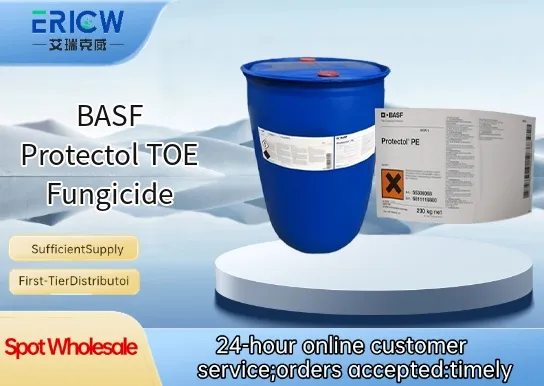
Broad-spectrum fungicidal activity against key wood-decaying and stain fungi, including *Coniophora puteana*, *Trametes versicolor*, and *Aureobasidium pullulans*.
Low volatility and high leach resistance, ensuring long-term protective performance in demanding outdoor and ground-contact applications.
Compatible with common wood preservative systems and co-formulatable with copper-based and organic biocides for synergistic efficacy.
Non-corrosive to metals and stable under typical processing conditions (pH 4–9, temperatures up to 60 °C).
Meets stringent environmental and regulatory requirements, including EU Biocidal Products Regulation (BPR) Annex I inclusion for wood preservation.
Pressure-treated softwood for residential and commercial construction (e.g., decking, fencing, utility poles).
Preservation of engineered wood products such as laminated veneer lumber (LVL) and glued-laminated timber (glulam).
Protection of exterior joinery, cladding, and façade elements exposed to humid or marine environments.
Formulation additive in waterborne wood preservatives for industrial impregnation plants.
Treatment of landscape timbers, garden sleepers, and recreational infrastructure requiring durable fungal resistance.
| Chemical Type | Tebuconazole-based fungicide (active ingredient: tebuconazole, ≥97.5% purity) |
| Product Form | Free-flowing, off-white to light beige crystalline powder |
| Appearance | Crystalline solid, odorless to faint characteristic odor |
| Primary Applications | Wood preservation (EU BPR PT8; US EPA FIFRA 180.137) |
| Solubility (in water) | Approx. 22 mg/L at 20 °C |
| Stability (pH range) | pH 4–9 (no significant degradation over 6 months at 25 °C) |
| Storage Conditions | Store in cool, dry place below 30 °C; protect from moisture and direct sunlight |
| Shelf Life | 24 months from date of manufacture when stored as recommended |
Q1: What is the primary mode of action of Protectol TOE Fungicide?
A: Protectol TOE Fungicide acts primarily as a contact fungicide with additional protective and mild inhibitory activity against a broad spectrum of mold, yeast, and bacterial contaminants. Its efficacy stems from disruption of cellular membrane integrity in susceptible microorganisms.
Q2: In which types of industrial formulations is Protectol TOE typically used?
A: It is commonly incorporated into water-based industrial coatings, adhesives, sealants, construction chemicals, and non-aqueous polymer dispersions where long-term microbiological stability is required during storage and service life.
Q3: Is Protectol TOE compatible with common thickeners and surfactants used in aqueous systems?
A: Yes, Protectol TOE demonstrates good compatibility with most standard associative and non-ionic thickeners, as well as common anionic and non-ionic surfactants—though compatibility should always be verified under actual formulation conditions and pH ranges.
Q4: How does temperature affect the performance and stability of Protectol TOE in formulated products?
A: Protectol TOE maintains effective antimicrobial performance across typical ambient storage and application temperatures. Prolonged exposure to elevated temperatures (>50 °C) over extended periods may gradually reduce its residual activity; therefore, storage below 30 °C is recommended for optimal shelf-life preservation.
Contact With Us:
E-mail: wangxingqiang@ericwchem.com
Have a Questions? Call Us:
Add:
Building A1, Jiete Industrial Park, Huangpu District, Guangzhou City, Guangdong Province, China