English
 Español
 tiếng việt
 русский
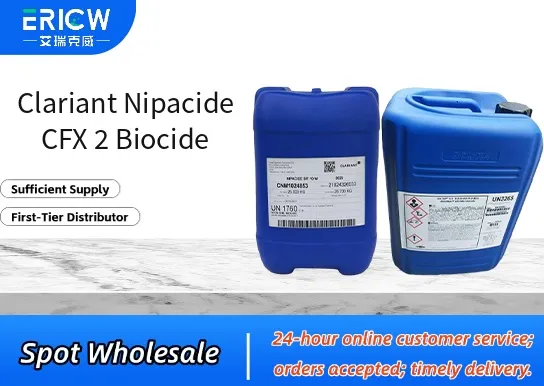
Broad-spectrum efficacy against bacteria, fungi, and algae in industrial water systems.
Low-toxicity formulation with favorable environmental and regulatory profile (e.g., compliant with EU BPR requirements).
Stable performance across a wide pH range (pH 4–10) and tolerant to common water treatment additives.
Non-oxidizing biocide—compatible with oxidant-based programs for hybrid control strategies.
Effective at low dosage rates, supporting cost-efficient and sustainable water management.
Cooling water systems in power plants and HVAC installations.
Process water circuits in paper, pulp, and textile manufacturing.
Recirculating water in metalworking fluid systems.
Industrial wastewater treatment and reuse applications.
Membrane protection in reverse osmosis (RO) pre-treatment systems.
| Chemical Type | Isothiazolinone-based blend (primarily 2-methyl-4-isothiazolin-3-one and 5-chloro-2-methyl-4-isothiazolin-3-one) |
| Product Form | Liquid concentrate |
| Appearance | Clear, pale yellow to amber liquid |
| pH (1% aqueous solution) | 3.0–5.0 |
| Density (20 °C) | 1.08–1.12 g/cm³ |
| Solubility | Completely miscible with water |
| Primary Applications | Non-oxidizing biocide for industrial water treatment |
| Key Features | Broad-spectrum, low-dosage, pH-stable, non-corrosive to common system materials |
Q1: What is the primary mode of action of Nipacide CFX 2?
A: Nipacide CFX 2 is a broad-spectrum, non-oxidizing biocide that functions primarily through membrane disruption and interference with essential cellular processes in bacteria, fungi, and algae. Its formulation is designed to provide rapid and persistent antimicrobial activity in challenging industrial environments.
Q2: In which types of systems is Nipacide CFX 2 typically applied?
A: It is commonly used in water-based industrial formulations such as metalworking fluids, latex emulsions, adhesives, coatings, and construction chemicals—especially where long-term microbial stability and low odor are critical. It is also suitable for preservation during storage and transport of intermediate products.
Q3: Is Nipacide CFX 2 compatible with common surfactants and thickeners?
A: Yes, Nipacide CFX 2 demonstrates good compatibility with a wide range of anionic, nonionic, and amphoteric surfactants, as well as common rheology modifiers including cellulose ethers and associative thickeners—making it suitable for complex, multi-component formulations.
Q4: How should Nipacide CFX 2 be dosed in a formulation?
A: Dosage depends on formulation requirements, challenge level, and regulatory considerations, but it is typically used at low concentrations—generally ranging from 0.1% to 2% by weight—added during the cool-down phase or post-emulsification to ensure optimal stability and efficacy.
Q5: Does Nipacide CFX 2 require pH adjustment for optimal performance?
A: Nipacide CFX 2 performs effectively across a broad pH range (approximately 4–10), with no strict requirement for pH adjustment in most applications. However, maintaining formulation pH within this window helps ensure consistent biocidal activity and shelf-life stability.
Contact With Us:
E-mail: wangxingqiang@ericwchem.com
Have a Questions? Call Us:
Add:
Building A1, Jiete Industrial Park, Huangpu District, Guangzhou City, Guangdong Province, China