English
 Español
 tiếng việt
 русский
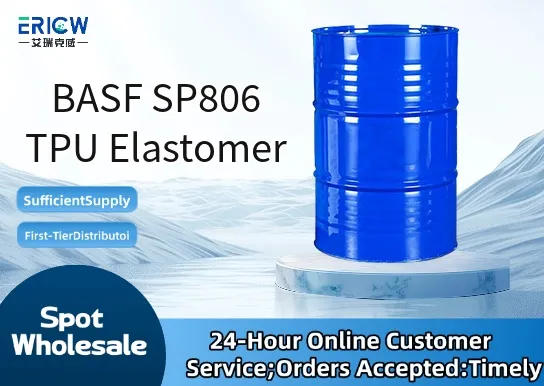
Excellent abrasion resistance for demanding mechanical service life requirements.
Outstanding oil and grease resistance, maintaining performance in lubricated environments.
Good low-temperature flexibility down to –30 °C without significant loss of elasticity.
High tensile strength and elongation at break for dynamic sealing and load-bearing applications.
Processable via injection molding, extrusion, and blow molding with stable melt viscosity.
Industrial hydraulic and pneumatic seals and gaskets.
Automotive bushings, suspension components, and powertrain mounts.
Conveyor belts and wear-resistant linings for material handling equipment.
High-performance hoses for fuel, oil, and compressed air systems.
Specialty rollers and drive components requiring dimensional stability under load.
| Chemical Type | Thermoplastic Polyurethane (TPU), polyester-based |
| Product Form | Pellets |
| Appearance | Off-white to light beige granules |
| Primary Applications | Dynamic seals, industrial rollers, automotive elastomeric parts |
| Key Features | Abrasion resistance, oil/grease resistance, low-temperature flexibility |
| Processing Methods | Injection molding, extrusion, blow molding |
| Density (ISO 1183) | Approx. 1.20 g/cm³ |
| Melt Flow Index (ISO 1133, 220 °C/10 kg) | Approx. 15 g/10 min |
Q1: What is the primary application area for SP806 TPU elastomer?
A: SP806 is a thermoplastic polyurethane elastomer designed primarily for extrusion and injection molding of high-performance flexible components—especially in automotive interior trim, technical hoses, and soft-touch overmolding applications where excellent melt stability, abrasion resistance, and surface aesthetics are required.
Q2: How does SP806 compare to other TPU grades in terms of processing behavior?
A: SP806 offers enhanced melt flow and lower viscosity compared to many conventional aromatic TPU grades, enabling smoother processing at lower temperatures and reduced shear sensitivity—making it particularly suitable for complex thin-wall parts and multi-material co-processing.
Q3: Is SP806 compatible with common engineering thermoplastics for co-injection or overmolding?
A: Yes—SP806 demonstrates good interfacial adhesion with polypropylene (PP), polyethylene (PE), and ABS when processed under optimized temperature and mold conditions; however, adhesion performance should be validated within the specific part geometry and process parameters of the intended application.
Q4: Does SP806 require drying before processing?
A: Yes—like most TPUs, SP806 is hygroscopic and must be thoroughly dried prior to processing. Recommended drying conditions are typically 80–90 °C for 2–4 hours using desiccant-assisted drying to achieve moisture content below 0.05% for optimal melt quality and mechanical performance.
Contact With Us:
E-mail: wangxingqiang@ericwchem.com
Have a Questions? Call Us:
Add:
Building A1, Jiete Industrial Park, Huangpu District, Guangzhou City, Guangdong Province, China