English
 Español
 tiếng việt
 русский
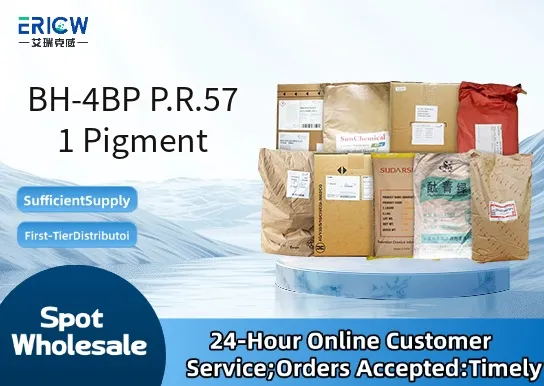
High chromatic strength and excellent color purity in red shade.
Outstanding thermal stability up to 220 °C, suitable for high-temperature processing.
Good dispersibility in both polar and non-polar polymer matrices.
Low volatility and minimal migration in PVC, polyolefin, and engineering plastics.
Compliant with major global regulatory standards including REACH and RoHS.
Coloration of rigid and flexible PVC profiles, films, and cables.
Masterbatch formulation for polypropylene (PP) and polyethylene (PE) packaging.
Automotive interior plastics requiring long-term lightfastness and heat resistance.
Engineering thermoplastics including ABS and polycarbonate for consumer electronics housings.
Food-contact compliant plastic containers and caps (subject to local regulatory approval).
| Chemical Type | Organic Pigment — P.R.57:1 (Beta-Naphthol) |
| Product Form | Fine free-flowing powder |
| Appearance | Reddish-brown powder |
| Primary Applications | PVC, polyolefins, ABS, polycarbonate |
| Key Features | High tinctorial strength, low dusting, good batch-to-batch consistency |
| Benefits | Reduced dosage requirement, improved processing efficiency, enhanced color uniformity |
| Storage Conditions | Store in cool, dry place; avoid direct sunlight and moisture |
| Shelf Life | 24 months from date of manufacture under recommended storage |
Q1: What is the primary chemical class and typical application field for BH-4BP P.R.57 1 Pigment?
A: BH-4BP P.R.57 1 is a high-performance organic pigment based on the perylene derivative structure, widely used in demanding industrial coatings, automotive refinishes, and high-gloss plastic coloration where excellent lightfastness and thermal stability are required.
Q2: Is BH-4BP P.R.57 1 suitable for use in food-contact plastics or packaging inks?
A: This pigment is not pre-approved for direct food-contact applications. Its suitability depends on final regulatory evaluation of the complete formulation—including migration behavior, processing conditions, and end-use compliance—by the responsible manufacturer or regulatory authority.
Q3: How does BH-4BP P.R.57 1 perform under elevated temperature during polymer processing?
A: It demonstrates good thermal stability up to typical melt-processing temperatures for polyolefins and engineering thermoplastics, with minimal color shift or decomposition when properly dispersed and processed below recommended thermal thresholds.
Q4: What dispersion methods are recommended to achieve optimal color development and stability?
A: High-shear dispersion using suitable dispersants or carrier resins is strongly recommended. Pre-dispersed concentrates or masterbatches typically deliver more consistent results than dry-powder addition, especially in low-viscosity systems or thin-film applications.
Q5: Can BH-4BP P.R.57 1 be safely combined with other high-performance pigments or effect pigments?
A: Yes, it is generally compatible with common organic and inorganic pigments, as well as metallic and pearlescent effect pigments—provided compatibility testing confirms no adverse interactions such as flocculation, reduced gloss, or accelerated fading in the final system.
Contact With Us:
E-mail: wangxingqiang@ericwchem.com
Have a Questions? Call Us:
Add:
Building A1, Jiete Industrial Park, Huangpu District, Guangzhou City, Guangdong Province, China