English
 Español
 tiếng việt
 русский
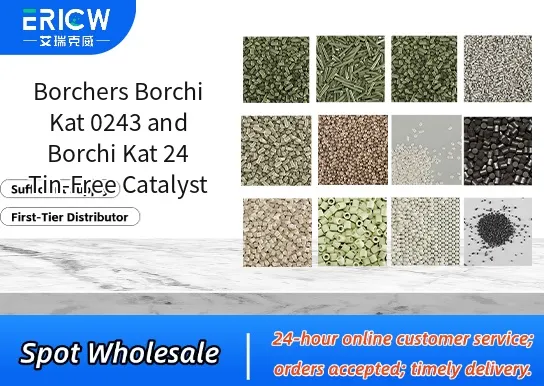
Non-tin, environmentally compliant alternative to traditional dibutyltin dilaurate (DBTDL) catalysts.
Enables fast and controlled urethane gelation without compromising pot life or storage stability.
Excellent compatibility with polyols, isocyanates, and common foam formulation additives.
Low odor and reduced volatility versus tin-based systems, supporting safer workplace handling.
Consistent catalytic performance across a broad temperature range (15–40 °C).
Flexible polyurethane slabstock foams for bedding and furniture.
Automotive seating and interior cushioning foams.
Spray-applied polyurethane insulation foams.
Reaction injection molding (RIM) and structural foam formulations.
High-resilience (HR) and molded flexible foam products.
| Chemical Type | Organometallic complex (bismuth-based) |
| Product Form | Liquid |
| Appearance | Clear to slightly hazy, pale yellow liquid |
| Primary Applications | Catalyst for polyurethane foam formation (gel reaction) |
| Key Features | Tin-free, REACH-compliant, low-VOC |
| Benefits | Regulatory compliance, consistent reactivity, improved worker safety |
| Storage Conditions | Store in original container at 10–30 °C, protect from moisture |
| Shelf Life | 24 months from date of manufacture under recommended conditions |
Q1: What is the primary functional difference between Borchi Kat 0243 and Borchi Kat 24?
A: Borchi Kat 0243 is a highly active tin-free catalyst designed for rapid urethane formation in demanding polyurethane systems, while Borchi Kat 24 offers balanced reactivity and extended pot life—making it especially suitable for coatings and adhesives requiring controlled cure profiles and reduced surface defects.
Q2: Are these catalysts compatible with moisture-cure and one-component polyurethane formulations?
A: Yes, both Borchi Kat 0243 and Borchi Kat 24 are formulated for effective use in moisture-curing, one-component polyurethane systems. They promote efficient reaction between isocyanate groups and ambient moisture without inducing premature skinning or inconsistent film formation.
Q3: How do these tin-free catalysts compare to traditional dibutyltin dilaurate (DBTDL) in terms of regulatory compliance and sustainability?
A: As tin-free alternatives, both products support compliance with evolving global restrictions on organotin compounds—including REACH SVHC considerations—and align with industry trends toward more sustainable, non-toxic curing solutions. Their design eliminates tin-related toxicity concerns without compromising catalytic efficiency in most standard PU applications.
Q4: What is the typical dosage range when using these catalysts in solventborne and high-solids polyurethane coatings?
A: Dosage depends on formulation requirements, resin type, and desired cure speed—but both catalysts are typically used at low concentrations, generally ranging from 0.1% to 2% by weight relative to total resin solids. Optimization through small-scale trials is recommended to achieve target performance.
Contact With Us:
E-mail: wangxingqiang@ericwchem.com
Have a Questions? Call Us:
Add:
Building A1, Jiete Industrial Park, Huangpu District, Guangzhou City, Guangdong Province, China