English
 Español
 tiếng việt
 русский
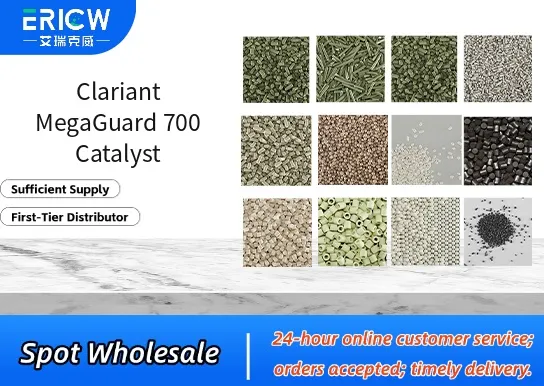
Highly selective hydrogenation catalyst for sulfur-sensitive petrochemical feedstocks.
Thermally stable formulation enabling robust performance under extended operation cycles.
Low nickel leaching risk, minimizing downstream contamination in refined product streams.
Optimized pore structure for improved mass transfer and reduced pressure drop in fixed-bed reactors.
Pre-sulfided and ready-to-use, eliminating on-site activation steps and associated safety hazards.
Hydrodesulfurization (HDS) of naphtha and light distillates in refinery hydrotreating units.
Selective saturation of dienes and olefins in C4–C6 hydrocarbon streams.
Stabilization of cracked gasoline fractions prior to etherification or alkylation units.
Treatment of pyrolysis gasoline (PyGas) to reduce gum-forming species and improve storage stability.
Upgrading of bio-derived hydrocarbon blends requiring deep sulfur and nitrogen removal.
| Chemical Type | Nickel-molybdenum on high-surface-area alumina support |
| Product Form | Extrudates (1.8–2.0 mm diameter) |
| Appearance | Black cylindrical pellets |
| Primary Applications | Hydrodesulfurization, selective hydrogenation, hydrotreating |
| Key Features | Pre-sulfided, low-dust, high metal dispersion |
| Benefits | Reduced start-up time, extended cycle length, improved product quality |
| Storage Requirement | Keep sealed under inert atmosphere; avoid moisture exposure |
Q1: What is the primary function of MegaGuard 700 in polymer processing?
A: MegaGuard 700 is a high-performance catalyst designed to promote efficient crosslinking and thermal stabilization in peroxide-cured elastomers and thermosetting polymers, helping to enhance scorch safety, improve cure uniformity, and support consistent final part properties.
Q2: Is MegaGuard 700 compatible with common elastomeric systems such as EPDM, NR, and SBR?
A: Yes — MegaGuard 700 demonstrates broad compatibility with natural rubber (NR), synthetic rubbers including EPDM and SBR, and selected thermoset compounds where controlled peroxide activation is required. Compatibility should always be verified under actual processing conditions and formulation matrices.
Q3: How is MegaGuard 700 typically incorporated into a compound?
A: It is generally introduced during the masterbatch or final mixing stage using standard internal mixers or two-roll mills. Due to its solid particulate form, it disperses readily in rubber matrices and is typically used at low concentrations — dosage depends on formulation requirements and desired cure kinetics.
Q4: Does MegaGuard 700 require special handling or storage conditions?
A: MegaGuard 700 should be stored in a cool, dry place, protected from moisture and direct sunlight. While not classified as hazardous for transport under normal conditions, standard industrial hygiene practices — including dust control and appropriate PPE during handling — are recommended to minimize exposure.
Contact With Us:
E-mail: wangxingqiang@ericwchem.com
Have a Questions? Call Us:
Add:
Building A1, Jiete Industrial Park, Huangpu District, Guangzhou City, Guangdong Province, China