English
 Español
 tiếng việt
 русский
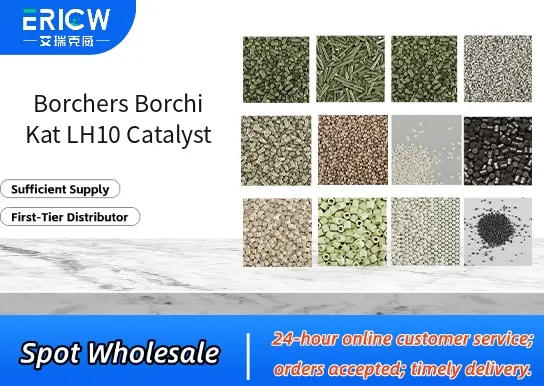
Highly selective cobalt-based catalyst for low-temperature oxidation reactions.
Exceptional thermal and hydrolytic stability under demanding process conditions.
Low metal leaching ensures consistent performance and reduced downstream contamination.
Designed for easy integration into existing continuous and batch reactor systems.
Complies with REACH and RoHS directives for sustainable industrial use.
Production of polyether polyols in flexible and rigid polyurethane foams.
Catalytic oxidation of alcohols to carbonyl compounds in fine chemical synthesis.
Enhancement of epoxidation efficiency in propylene oxide and glycidol manufacturing.
Accelerated ring-opening polymerization of lactides and cyclic carbonates.
Stabilized catalysis in waterborne coatings and high-solids resin formulations.
| Chemical Type | Cobalt(II) carboxylate complex |
| Product Form | Liquid solution in aromatic hydrocarbon carrier |
| Appearance | Clear, reddish-brown homogeneous liquid |
| Co Content (w/w %) | 4.5–5.2% |
| Density (20 °C) | 0.92–0.96 g/cm³ |
| Viscosity (25 °C) | 18–25 mPa·s |
| pH (1% aqueous dispersion) | 6.0–7.5 |
| Storage Stability | ≥12 months at 5–25 °C in sealed container |
Q1: What is the primary function of Borchi Kat LH10 in coating and ink formulations?
A: Borchi Kat LH10 is a cobalt-free, heavy-metal-free drier catalyst designed to accelerate the oxidative crosslinking of alkyd resins and other air-drying binders. It promotes efficient surface and through-dry without the regulatory or handling concerns associated with traditional cobalt-based driers.
Q2: Is Borchi Kat LH10 compatible with waterborne systems?
A: Yes — Borchi Kat LH10 is formulated for compatibility with both solvent-borne and waterborne alkyd and hybrid resin systems. Its stable dispersion allows effective integration into emulsified or pseudo-solution architectures without phase separation or destabilization.
Q3: How should Borchi Kat LH10 be dosed in a typical formulation?
A: Dosage depends on formulation requirements, binder type, film thickness, and drying conditions. It is typically used at low concentrations — generally ranging from 0.1% to 2% by weight relative to total resin solids — and should be added during the let-down stage under moderate agitation.
Q4: Does Borchi Kat LH10 contribute to yellowing or discoloration in clear coats?
A: No — unlike some transition metal driers, Borchi Kat LH10 exhibits excellent color stability and low tendency toward yellowing, making it suitable for high-clarity and white-pigmented systems where long-term chromatic integrity is critical.
Contact With Us:
E-mail: wangxingqiang@ericwchem.com
Have a Questions? Call Us:
Add:
Building A1, Jiete Industrial Park, Huangpu District, Guangzhou City, Guangdong Province, China