English
 Español
 tiếng việt
 русский
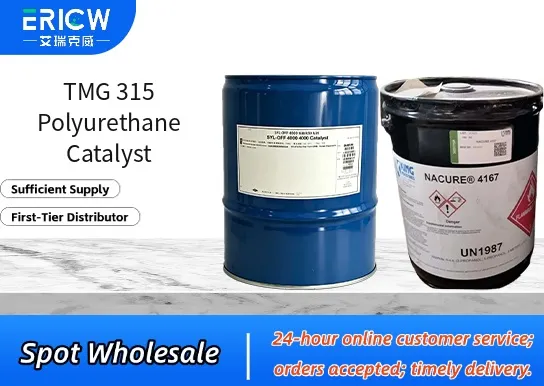
Highly selective tertiary amine catalyst optimized for polyurethane foam gelation control.
Low volatility and minimal odor, supporting safer handling and improved workplace air quality.
Excellent compatibility with common polyols, isocyanates, and auxiliary catalysts in PU systems.
Enables balanced reactivity—promotes early gelation without excessive blow reaction interference.
Stable liquid formulation with extended shelf life under recommended storage conditions.
Flexible slabstock polyurethane foams for bedding and furniture manufacturing.
High-resilience (HR) molded foams used in automotive seating and premium upholstery.
Semi-rigid automotive interior foams including headrests, armrests, and dash pads.
Water-blown or low-VOC PU foam formulations requiring reduced emissions compliance.
| Chemical Type | Tertiary amine catalyst |
| Product Form | Liquid |
| Appearance | Clear, pale yellow liquid |
| Primary Applications | Gelation control in flexible & semi-rigid PU foams |
| Key Features | Selective gel promotion, low volatility, good compatibility |
| Benefits | Improved foam dimensional stability, reduced cure time, enhanced processing window |
| Storage Conditions | Store in original sealed container at 10–30°C, protect from moisture |
| Shelf Life | 24 months from date of manufacture under proper storage |
Q1: What is the primary function of TMG 315 in polyurethane systems?
A: TMG 315 is a tertiary amine-based catalyst designed to promote the urethane reaction (isocyanate–polyol coupling), offering balanced reactivity and improved flow characteristics—particularly beneficial in flexible slabstock and molded foam applications.
Q2: Is TMG 315 compatible with water-blown and low-emission PU formulations?
A: Yes, TMG 315 exhibits good compatibility with water-blown systems and supports low-VOC and low-amine-odor formulations when used as part of a carefully balanced catalyst package.
Q3: How does TMG 315 compare to traditional triethylenediamine (DABCO® 33-LV) in processing behavior?
A: TMG 315 delivers comparable gelling activity but with reduced volatility and milder odor profile, contributing to improved workplace handling and enhanced stability in premixes over extended storage periods.
Q4: Can TMG 315 be used in combination with other catalysts?
A: Yes—it is commonly blended with delayed-action catalysts or surfactants to fine-tune cream time, rise profile, and cell structure; compatibility should be verified empirically for each specific formulation.
Q5: What are the recommended storage conditions for TMG 315?
A: Store in original sealed containers at temperatures between 5 °C and 30 °C, protected from moisture, direct sunlight, and strong oxidizing agents to maintain catalytic performance and shelf life.
Contact With Us:
E-mail: wangxingqiang@ericwchem.com
Have a Questions? Call Us:
Add:
Building A1, Jiete Industrial Park, Huangpu District, Guangzhou City, Guangdong Province, China