English
 Español
 tiếng việt
 русский
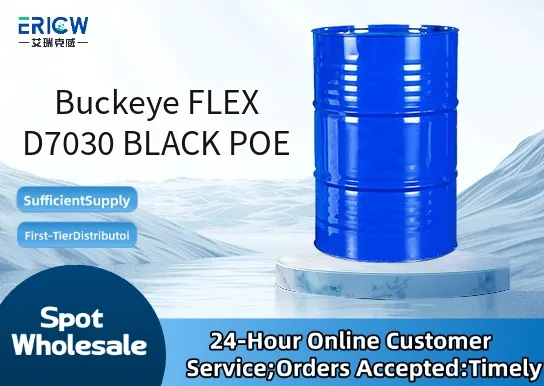
High-performance polyolefin elastomer (POE) with excellent low-temperature flexibility and impact resistance.
Carbon-black masterbatch formulation enabling consistent black coloration and UV stabilization in final compounds.
Superior melt processability for extrusion, injection molding, and blow molding operations.
Enhanced compatibility with polypropylene (PP) and polyethylene (PE) matrices for improved blend homogeneity.
Low extractables and compliant with FDA 21 CFR §177.1520 for food-contact applications when used within specified limits.
Automotive interior trim components requiring soft-touch feel and dimensional stability.
Flexible packaging films demanding toughness, seal integrity, and puncture resistance.
Consumer goods housings and grips where ergonomic design and durability are critical.
Medical device tubing and connectors requiring biocompatibility and kink resistance.
Industrial hoses and seals exposed to dynamic mechanical stress and environmental aging.
| Chemical Type | Polyolefin Elastomer (POE) with carbon black dispersion |
| Product Form | Pellets |
| Appearance | Black, free-flowing pellets |
| Primary Applications | Toughening agent and colorant for PP/PE-based thermoplastics |
| Key Features | UV-stabilized, low-volatility, FDA-compliant base formulation |
| Benefits | Improved impact strength, enhanced process efficiency, consistent color uniformity |
| Density (g/cm³) | 0.890–0.905 |
| Melt Flow Rate (g/10 min, 230°C/2.16 kg) | 1.0–3.0 |
Q1: What is the primary function of Buckeye FLEX D7030 BLACK POE in polymer systems?
A: Buckeye FLEX D7030 BLACK POE is a polyolefin elastomer masterbatch designed to enhance flexibility, impact resistance, and low-temperature toughness in polypropylene and polyethylene-based compounds—particularly where consistent black coloration and melt-processability are required.
Q2: Is this product compatible with injection molding and extrusion processes?
A: Yes, Buckeye FLEX D7030 BLACK POE is formulated for robust performance in conventional thermoplastic processing methods including injection molding, blow molding, and single-screw extrusion. Its rheology supports good dispersion and stable output without excessive die buildup or flow instability.
Q3: How should it be incorporated into base resins?
A: It is typically added as a masterbatch via gravimetric or volumetric feeding, followed by thorough melt mixing. Dosage depends on formulation requirements but generally ranges from 0.1% to 2% by weight to achieve target mechanical properties and uniform black appearance.
Q4: Does this grade contain any halogenated flame retardants or heavy metals?
A: No—Buckeye FLEX D7030 BLACK POE is intentionally formulated without halogenated flame retardants, lead, cadmium, mercury, or hexavalent chromium, supporting compliance with common restricted-substance programs for automotive and consumer goods applications.
Contact With Us:
E-mail: wangxingqiang@ericwchem.com
Have a Questions? Call Us:
Add:
Building A1, Jiete Industrial Park, Huangpu District, Guangzhou City, Guangdong Province, China