English
 Español
 tiếng việt
 русский
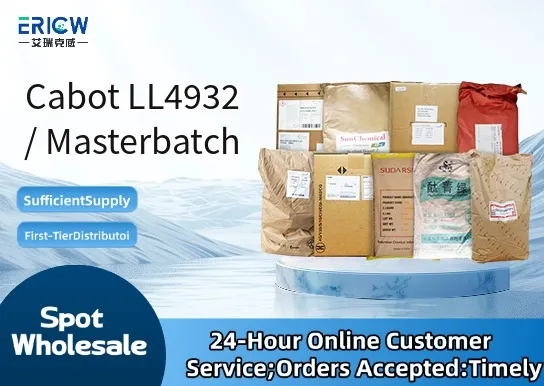
Highly concentrated carbon black masterbatch for efficient pigment dispersion in polyolefin resins.
Excellent thermal stability enabling processing at elevated extrusion and injection molding temperatures.
Consistent color strength and batch-to-batch reproducibility certified under ISO 9001 manufacturing controls.
Low dust generation and free-flowing pellet form for safe, clean handling in automated feeding systems.
Optimized for low-migration performance in food-contact-compliant polypropylene and HDPE applications.
Automotive interior trim components requiring UV resistance and dimensional stability.
Food-grade packaging containers and caps made from polypropylene and high-density polyethylene.
Industrial containers and totes where chemical resistance and long-term color retention are critical.
Consumer durable goods housings demanding consistent matte black aesthetics and surface uniformity.
Medical device trays and packaging components meeting USP Class VI and FDA-compliant resin requirements.
| Chemical Type | Carbon black dispersed in polyolefin carrier |
| Product Form | Cylindrical pellets (3.0–3.5 mm diameter) |
| Appearance | Uniform black pellets with smooth surface |
| Primary Applications | Polypropylene (PP), high-density polyethylene (HDPE), and polyethylene terephthalate (PET) |
| Key Features | High loading (25–30% carbon black), low volatile content (<0.5%), and excellent melt flow compatibility |
| Benefits | Reduced dosing variability, minimized filter clogging, and improved final part gloss control |
| Storage Conditions | Store in dry, cool environment (<30°C); keep sealed to prevent moisture absorption |
| Regulatory Compliance | Complies with FDA 21 CFR §178.3290 and EU Regulation (EC) No 10/2011 for food contact |
Q1: What is Cabot LL4932, and how does it differ from standard carbon black masterbatches?
A: Cabot LL4932 is a specialized low-luminance carbon black masterbatch engineered for applications requiring high jetness and minimal surface reflectivity—particularly in premium packaging, technical films, and automotive interior components. Unlike conventional masterbatches, it delivers enhanced dispersion stability and reduced agglomeration in demanding polymer matrices such as polyolefins and engineering thermoplastics.
Q2: Which polymers is Cabot LL4932 compatible with, and are there any processing limitations?
A: Cabot LL4932 is formulated for optimal compatibility with polyethylene (PE), polypropylene (PP), and select polyolefin-based blends. It performs well under standard extrusion and injection molding conditions; however, extended residence time at elevated temperatures (>260°C) may affect dispersion integrity and should be minimized during processing.
Q3: How should Cabot LL4932 be incorporated into a base resin, and what dosage range is typical?
A: Cabot LL4932 is added directly to the base polymer using standard gravimetric or volumetric feeding systems. Dosage depends on formulation requirements and desired optical performance, but it is typically used at low concentrations—generally ranging from 0.1% to 2% by weight—to achieve deep black shades without compromising mechanical properties or processability.
Q4: Does Cabot LL4932 meet regulatory requirements for food-contact or medical applications?
A: Cabot LL4932 is manufactured under strict quality control protocols and complies with general food-contact guidelines for polyolefins where permitted by applicable regional regulations. However, final compliance depends on the complete formulation, processing conditions, and end-use application—users must conduct their own regulatory assessment and validation prior to commercial use in regulated markets.
Contact With Us:
E-mail: wangxingqiang@ericwchem.com
Have a Questions? Call Us:
Add:
Building A1, Jiete Industrial Park, Huangpu District, Guangzhou City, Guangdong Province, China