English
 Español
 tiếng việt
 русский
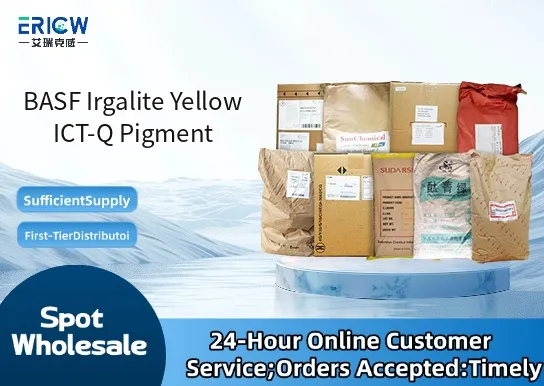
High chromatic strength and excellent color purity in yellow shade.
Good thermal stability suitable for medium-temperature processing applications.
Outstanding lightfastness and weather resistance in outdoor polymer applications.
Excellent dispersibility in common organic solvents and polymer matrices.
Low volatility and minimal migration in PVC and flexible vinyl compounds.
PVC profiles and window frames.
Flexible and rigid vinyl flooring.
Wire and cable insulation (PVC-based).
Automotive interior trims and dashboards.
General-purpose engineering thermoplastics (e.g., ABS, PS).
| Chemical Type | Azo pigment (disazo) |
| Product Form | Free-flowing powder |
| Appearance | Yellow to orange-yellow powder |
| Primary Applications | PVC, ABS, PS, and other thermoplastics |
| Key Features | Good heat stability up to 180°C, low bleed resistance |
| Benefits | Consistent batch-to-batch color reproducibility and high tinctorial strength |
| Regulatory Compliance | Compliant with EU REACH; non-POPs, non-REACH SVHC |
Q1: What is the primary application area for Irgalite Yellow ICT-Q?
A: Irgalite Yellow ICT-Q is a high-performance, solvent-stable yellow pigment specifically developed for use in industrial coatings, including coil coatings, automotive refinishes, and general metal finishing systems where excellent lightfastness, heat stability, and dispersion robustness are required.
Q2: Is this pigment suitable for water-based systems?
A: While Irgalite Yellow ICT-Q is primarily optimized for solvent-borne and high-solids coating systems, it can be formulated into water-based systems using appropriate dispersants and stabilization technology — however, performance attributes such as gloss retention and rheological behavior must be validated in the final formulation.
Q3: How does ICT-Q compare to other Irgalite Yellow grades in terms of heat stability?
A: ICT-Q exhibits enhanced thermal stability relative to standard arylide yellows, making it suitable for applications involving curing temperatures up to approximately 200 °C — particularly valuable in coil coating and powder coating pre-treatment scenarios where pigment integrity under thermal stress is critical.
Q4: What is the recommended dosage range for optimal color strength and dispersion?
A: Dosage depends on the specific vehicle system and desired opacity or transparency, but typical usage ranges from 0.1% to 2% by weight in the final coating formulation — with lower concentrations often sufficient due to its high tinting strength and efficient dispersion characteristics.
Contact With Us:
E-mail: wangxingqiang@ericwchem.com
Have a Questions? Call Us:
Add:
Building A1, Jiete Industrial Park, Huangpu District, Guangzhou City, Guangdong Province, China