English
 Español
 tiếng việt
 русский
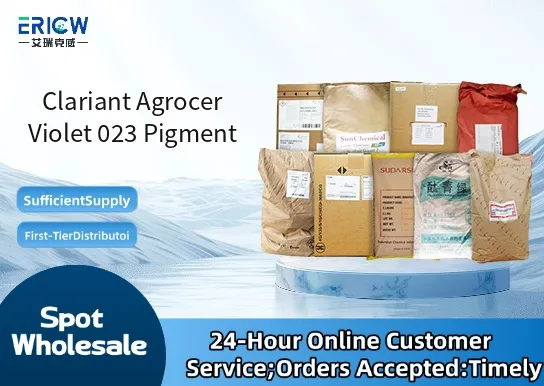
High chroma violet shade with excellent batch-to-batch color consistency.
Outstanding thermal stability suitable for processing temperatures up to 220 °C.
Good lightfastness and weather resistance in outdoor applications.
Low volatility and minimal extractables—compliant with stringent regulatory requirements for agricultural films.
Optimized dispersibility in polyolefin and EVA matrices without requiring additional dispersing aids.
Agricultural mulch films for horticultural crop cultivation.
Greenhouse covering films requiring UV-stable, non-bleeding violet tinting.
Seed tape and biodegradable agricultural packaging materials.
UV-blocking irrigation tubing and drip-line components.
Specialty protective films for photoselective plant growth modulation.
| Chemical Type | Organic pigment (Diketopyrrolopyrrole derivative) |
| Product Form | Free-flowing powder |
| Appearance | Violet-red free-flowing granular powder |
| Primary Applications | Agricultural plastics, greenhouse films, mulch films |
| Key Features | Thermal stability, low migration, UV resistance |
| Regulatory Compliance | EU REACH registered; compliant with FDA 21 CFR §178.3297 for indirect food contact |
| Particle Size (D50) | Approx. 0.15–0.25 µm |
| Recommended Loading Range | 0.1–0.5 wt% in polyolefin compounds |
Q1: What is the primary application field for Agrocer Violet 023?
A: Agrocer Violet 023 is specifically developed for agricultural plastic applications, including mulch films, greenhouse covers, and irrigation tapes, where light management and UV stability are critical performance requirements.
Q2: Is this pigment suitable for direct food-contact agricultural plastics?
A: Agrocer Violet 023 is not intended for direct food-contact applications. It is formulated for non-food-contact agricultural films and components, and compliance with food-contact regulations should be verified separately for specific end-use configurations.
Q3: How does Agrocer Violet 023 perform under prolonged UV exposure?
A: This pigment exhibits enhanced UV resistance due to its inorganic ceramic-based composition, supporting long-term color retention and minimal fading in outdoor agricultural film applications.
Q4: What is the typical dosage range when incorporating this pigment into polyethylene (PE) mulch films?
A: Dosage depends on formulation requirements and desired optical effect, but it is typically used at low concentrations—generally ranging from 0.1% to 2% by weight in PE-based systems.
Q5: Can Agrocer Violet 023 be used in combination with other Agrocer pigments?
A: Yes—Agrocer Violet 023 is designed to be compatible with other pigments in the Agrocer portfolio, enabling customized spectral profiles for tailored light-filtering effects in agricultural films.
Contact With Us:
E-mail: wangxingqiang@ericwchem.com
Have a Questions? Call Us:
Add:
Building A1, Jiete Industrial Park, Huangpu District, Guangzhou City, Guangdong Province, China