English
 Español
 tiếng việt
 русский
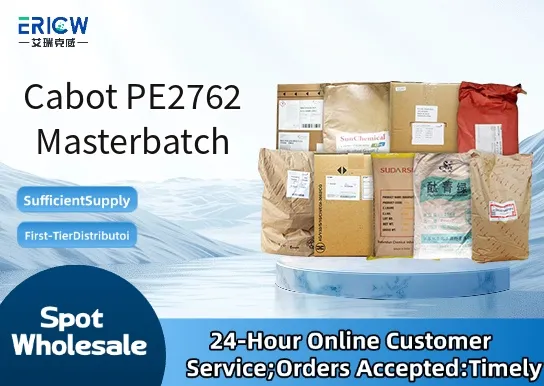
Highly concentrated carbon black dispersion for consistent color and performance.
Optimized for polyethylene (PE) resins, ensuring excellent melt flow and processability.
Low dust formulation enhances workplace safety and reduces equipment contamination.
Excellent UV stabilization properties to improve long-term weather resistance of end products.
Good dispersion stability prevents agglomeration during storage and processing.
Blow-molded HDPE containers for food and chemical packaging.
Extruded PE pipes and fittings requiring UV resistance and structural integrity.
Rotational molded tanks and industrial parts exposed to outdoor environments.
Injection-molded consumer goods requiring jet-black aesthetics and dimensional stability.
Geotextiles and agricultural films needing durable pigment retention and weathering performance.
| Chemical Type | Carbon black masterbatch |
| Product Form | Pellets |
| Appearance | Jet-black free-flowing pellets |
| Base Resin | Linear low-density polyethylene (LLDPE) |
| Carbon Black Loading | 25 ± 1 wt% |
| Melt Flow Rate (190°C/2.16 kg) | 18–22 g/10 min |
| Moisture Content | < 0.3 wt% |
| Key Features | UV resistance, low dust, high dispersion, PE-compatible |
Q1: What is the primary function of Cabot PE2762 Masterbatch in polyolefin applications?
A: Cabot PE2762 Masterbatch is a carbon black–based concentrate designed to provide consistent jetness, UV stabilization, and electrical conductivity control in polyethylene and polypropylene compounds. It is formulated specifically for use in demanding extrusion and injection molding processes where dispersion quality and thermal stability are critical.
Q2: Is Cabot PE2762 suitable for food-contact or medical-grade polyolefin applications?
A: Cabot PE2762 is manufactured under stringent quality controls and is commonly used in applications requiring regulatory compliance, including certain food-contact and medical packaging grades. However, final suitability depends on the complete formulation, processing conditions, and applicable regional regulations — users must validate compliance through their own testing and regulatory assessment.
Q3: How should Cabot PE2762 be incorporated into polyolefin resins during compounding?
A: It is typically introduced via gravimetric or volumetric feeding directly into the extruder throat or hopper, often downstream of the main resin feed. Good melt mixing and sufficient residence time are recommended to ensure optimal dispersion. Pre-blending with carrier resin prior to extrusion may improve uniformity in high-precision applications.
Q4: What are typical dosage ranges for Cabot PE2762 in standard PE/PP formulations?
A: Dosage generally ranges from 0.1% to 2% by weight, depending on the desired level of color intensity, UV protection, or conductivity performance. Most applications achieve target properties at concentrations between 0.5% and 1.5%, but optimization requires evaluation within the specific compound system and processing equipment.
Q5: Does Cabot PE2762 require special drying or handling prior to use?
A: While not hygroscopic like some pigment systems, Cabot PE2762 should be stored in a cool, dry environment and protected from contamination. Pre-drying is not typically required for standard processing; however, if exposed to high humidity over extended periods, mild conditioning may be considered to support consistent feeding and dispersion.
Contact With Us:
E-mail: wangxingqiang@ericwchem.com
Have a Questions? Call Us:
Add:
Building A1, Jiete Industrial Park, Huangpu District, Guangzhou City, Guangdong Province, China