English
 Español
 tiếng việt
 русский
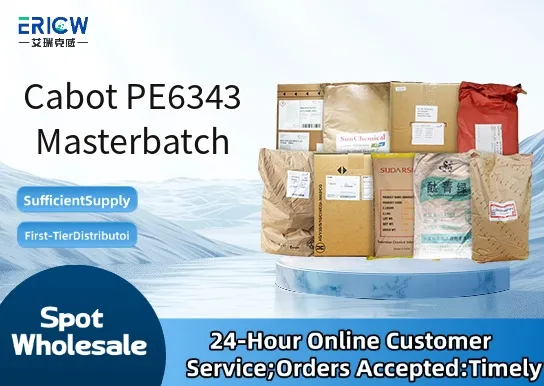
Highly concentrated carbon black dispersion for consistent color and performance.
Optimized for polyethylene (PE) resins, ensuring excellent melt compatibility and dispersion stability.
Low dust formulation with improved handling safety and reduced housekeeping requirements.
Enhanced UV protection for extended outdoor durability of end-use products.
Consistent batch-to-batch quality supported by Cabot’s global manufacturing controls.
Rotomolded tanks and containers for chemical and water storage.
Blow-molded HDPE bottles and drums requiring UV resistance and pigment uniformity.
Extruded PE pipes and fittings for municipal and agricultural applications.
Injection-molded industrial parts exposed to outdoor environments.
Geomembranes and pond liners requiring long-term weathering performance.
| Chemical Type | Carbon black masterbatch in polyethylene carrier |
| Product Form | Free-flowing granules |
| Appearance | Black, uniform granules |
| Carbon Black Loading | Approx. 25% w/w |
| Carrier Resin | LDPE/HDPE blend |
| Melt Flow Index (190°C/2.16 kg) | 15–25 g/10 min |
| Moisture Content | < 0.2% w/w |
| Key Features | UV stabilization, low dust, high dispersion efficiency |
Q1: What is the primary function of Cabot PE6343 Masterbatch in polyethylene applications?
A: Cabot PE6343 is a carbon black–based masterbatch designed to provide consistent coloration, UV stabilization, and enhanced electrical conductivity in polyethylene compounds—particularly where static dissipation or long-term outdoor performance is required.
Q2: Is Cabot PE6343 suitable for food-contact polyethylene packaging?
A: Cabot PE6343 is formulated with carbon black grades compliant with global food-contact regulations for plastics; however, final regulatory compliance depends on the full formulation, processing conditions, and end-use requirements. Users must validate suitability through their own regulatory assessment and testing.
Q3: How is Cabot PE6343 typically incorporated into PE resin during processing?
A: It is commonly introduced via gravimetric or volumetric feeders during extrusion or injection molding. Due to its optimized dispersion characteristics, it achieves uniform distribution at low addition levels—typically ranging from 0.1% to 2% by weight, depending on the desired property balance and base resin type.
Q4: Does Cabot PE6343 require drying before use?
A: Unlike hygroscopic additives, Cabot PE6343 is supplied in a polyethylene carrier matrix and does not require pre-drying under standard processing conditions. However, prolonged exposure to high humidity should be avoided to maintain optimal handling and dispersion performance.
Contact With Us:
E-mail: wangxingqiang@ericwchem.com
Have a Questions? Call Us:
Add:
Building A1, Jiete Industrial Park, Huangpu District, Guangzhou City, Guangdong Province, China