English
 Español
 tiếng việt
 русский
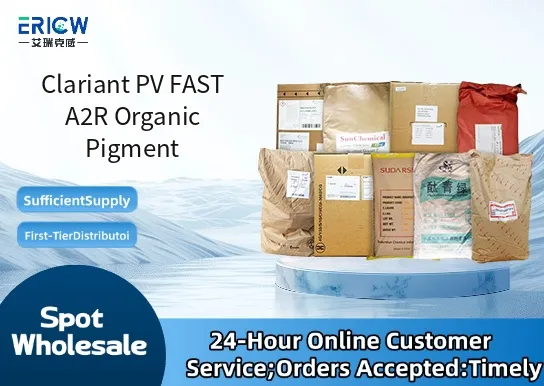
High chroma and excellent color strength for vibrant, consistent red shades.
Outstanding thermal stability suitable for high-temperature processing up to 280 °C.
Good lightfastness and weather resistance in demanding outdoor applications.
Excellent dispersibility in both polar and non-polar polymer matrices.
Compliant with major global regulatory frameworks including REACH and RoHS.
Polyolefin (PP, PE) injection molding and extrusion.
Engineering plastics including ABS, PS, and PC blends.
Masterbatch production for automotive interior components.
Food-contact-compliant packaging films (subject to local regulatory approval).
Industrial coatings requiring high-gloss, fade-resistant red tones.
| Chemical Type | Quinacridone derivative |
| Product Form | Free-flowing powder |
| Appearance | Red-violet fine powder |
| Primary Applications | Polymer coloration, masterbatches, coatings |
| Key Features | High heat stability, excellent dispersion, low dusting |
| Benefits | Consistent batch-to-batch color, reduced filtration issues, improved processing efficiency |
| Recommended Carrier | HDPE or LDPE for masterbatch formulations |
| Storage Conditions | Store in cool, dry place; protect from moisture and direct sunlight |
Q1: What is the primary chemical class and typical application field for PV FAST A2R?
A: PV FAST A2R is a high-performance quinacridone-based organic pigment, widely used in demanding industrial coatings, automotive refinishes, and high-gloss plastic applications where excellent lightfastness, weather resistance, and clean red-violet hue are required.
Q2: Is PV FAST A2R suitable for food-contact plastics or regulated packaging applications?
A: PV FAST A2R is not designed or certified for direct food-contact applications. It is intended for general industrial use; any use in regulated packaging requires thorough evaluation by the formulator against applicable regional regulatory frameworks and migration testing protocols.
Q3: How does PV FAST A2R perform in terms of heat stability during polymer processing?
A: This pigment exhibits good thermal stability suitable for standard processing of polyolefins, ABS, and PS. It generally withstands temperatures up to approximately 280 °C for short residence times, though optimal dispersion and minimal exposure time are recommended to preserve color strength and hue integrity.
Q4: What dispersion methods are recommended to achieve optimal color development and consistency?
A: For best results, high-shear dispersion using suitable dispersants and wetting agents is advised—particularly in solvent-borne systems and engineering thermoplastics. Pre-dispersed paste or masterbatch forms are commonly preferred to ensure uniform distribution and minimize agglomeration risks.
Q5: Can PV FAST A2R be used alongside other high-performance pigments in multi-pigment systems?
A: Yes—PV FAST A2R demonstrates good compatibility with many common high-performance organic and inorganic pigments in mixed-hue formulations, provided careful assessment of potential interactions (e.g., flocculation, hue shift) is conducted during lab-scale trials and rheological optimization.
Contact With Us:
E-mail: wangxingqiang@ericwchem.com
Have a Questions? Call Us:
Add:
Building A1, Jiete Industrial Park, Huangpu District, Guangzhou City, Guangdong Province, China