English
 Español
 tiếng việt
 русский
High thermal stability up to 800°C, ensuring color integrity in high-temperature processing.
Excellent lightfastness and weather resistance, maintaining hue and opacity under prolonged UV exposure.
Non-toxic, heavy-metal-free formulation compliant with global regulatory standards including EN 71-3 and RoHS.
Consistent particle size distribution for optimal dispersion and rheological performance in liquid systems.
Strong tinting strength and high hiding power due to optimized iron oxide crystallinity and surface treatment.
Architectural coatings including exterior masonry paints and textured finishes.
Ceramic glazes and clay-based tile colorants for kiln-fired applications.
Plastic coloration for outdoor furniture, automotive interior components, and construction profiles.
Concrete and cementitious products such as precast elements, pavers, and stucco.
Industrial maintenance coatings requiring long-term corrosion protection and aesthetic durability.
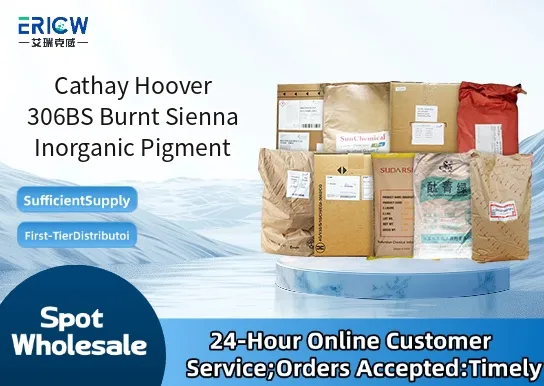
| Chemical Type | Iron(III) oxide (α-Fe₂O₃) based inorganic pigment |
| Product Form | Dry powder |
| Appearance | Free-flowing reddish-brown powder |
| Primary Applications | Coatings, plastics, ceramics, concrete, and construction materials |
| Key Features | Heat resistant, lightfast, weatherproof, non-toxic, low oil absorption |
| Benefits | Color consistency, excellent dispersibility, minimal flocculation, low VOC impact |
| Storage Conditions | Store in cool, dry place away from direct sunlight and moisture |
| Shelf Life | 24 months from date of manufacture under recommended storage conditions |
Q1: What is the primary chemical composition of Cathay Hoover 306BS?
A: Cathay Hoover 306BS is an iron oxide-based inorganic pigment, primarily composed of thermally stabilized α-Fe₂O₃ (hematite), with controlled particle size distribution and surface characteristics optimized for color consistency and dispersion stability.
Q2: Is 306BS suitable for use in exterior architectural coatings?
A: Yes — as a high-performance inorganic oxide pigment, 306BS offers excellent UV resistance, thermal stability, and weatherfastness, making it well-suited for long-term outdoor applications including masonry paints, stucco systems, and concrete colorants.
Q3: How does 306BS compare to organic burnt sienna alternatives in terms of heat stability?
A: Unlike many organic pigments, 306BS retains its color integrity at elevated processing temperatures — typically up to 800°C — and shows no significant thermal degradation during standard polymer compounding or ceramic firing cycles.
Q4: What are typical dosage levels when using 306BS in water-based architectural paints?
A: Dosage depends on desired opacity and shade intensity, but 306BS is generally used at low concentrations — typically ranging from 0.1% to 2% by weight in the final formulation — due to its high tinting strength and efficient light absorption.
Q5: Can 306BS be dispersed effectively in non-aqueous systems such as solvent-borne alkyds or polyurethane coatings?
A: Yes — with appropriate wetting agents and high-shear dispersion techniques, 306BS achieves stable, uniform dispersion in both polar and non-polar media, supporting consistent rheology and minimal settling in solvent-based industrial coatings.
Contact With Us:
E-mail: wangxingqiang@ericwchem.com
Have a Questions? Call Us:
Add:
Building A1, Jiete Industrial Park, Huangpu District, Guangzhou City, Guangdong Province, China