English
 Español
 tiếng việt
 русский
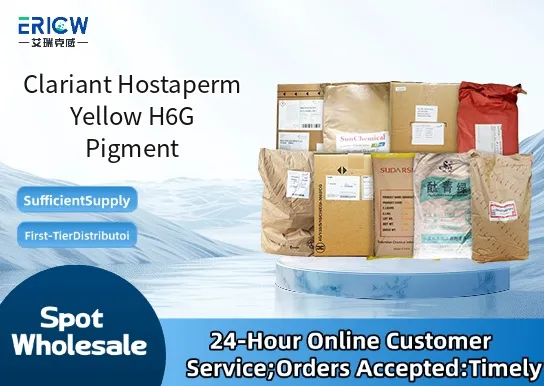
High chroma and excellent lightfastness in demanding applications.
Outstanding thermal stability up to 280 °C for high-speed extrusion processes.
Good dispersibility in both polar and non-polar polymer systems.
Low migration tendency, ensuring color consistency in PVC, polyolefins, and engineering plastics.
Compliant with major global regulatory frameworks including EU REACH and US FDA 21 CFR for selected applications.
Coloration of polypropylene (PP) and polyethylene (PE) fibers and injection-molded parts.
Transparent and opaque PVC profiles, cables, and flooring.
Engineering plastics such as ABS, PS, and PC for automotive interior components.
Masterbatch production for packaging films and consumer goods.
Coating systems requiring high weather resistance and gloss retention.
| Chemical Type | Azo pigment (disazo) |
| Product Form | Free-flowing powder |
| Appearance | Yellow to orange-yellow powder |
| Primary Applications | Polyolefins, PVC, ABS, PS, coatings |
| Key Features | High heat stability, low volatility, good UV resistance |
| Benefits | Consistent batch-to-batch color, minimal filter pressure build-up in extrusion |
| Regulatory Status | EU REACH registered; compliant with ISO 8124-3 for toy safety (migration limits) |
Q1: What are the primary application areas for Hostaperm Yellow H6G?
A: Hostaperm Yellow H6G is widely used in high-performance industrial coatings, automotive refinishes, and engineering plastics where excellent lightfastness, thermal stability, and color strength are required. It is also suitable for select ink systems demanding good dispersibility and hue consistency.
Q2: How does Hostaperm Yellow H6G perform under elevated processing temperatures?
A: This pigment exhibits good thermal stability and is suitable for processing temperatures commonly encountered in polyolefin and polyester compounding, as well as in baking enamel systems. Its performance remains robust up to typical extrusion and injection molding conditions, though exact limits depend on residence time and matrix compatibility.
Q3: Is Hostaperm Yellow H6G compatible with common organic solvent-based and water-based systems?
A: Yes — it demonstrates good compatibility in both solvent-borne systems (e.g., aromatic and aliphatic hydrocarbons, esters, ketones) and aqueous dispersions when properly dispersed. Optimal performance requires appropriate surfactant selection and dispersion protocols tailored to the specific medium.
Q4: What is the typical dosage range for achieving target color strength in polymer applications?
A: Dosage depends on formulation requirements and desired opacity or transparency, but it is typically used at low concentrations — generally ranging from 0.1% to 2% by weight in most thermoplastic and thermoset systems.
Contact With Us:
E-mail: wangxingqiang@ericwchem.com
Have a Questions? Call Us:
Add:
Building A1, Jiete Industrial Park, Huangpu District, Guangzhou City, Guangdong Province, China