English
 Español
 tiếng việt
 русский
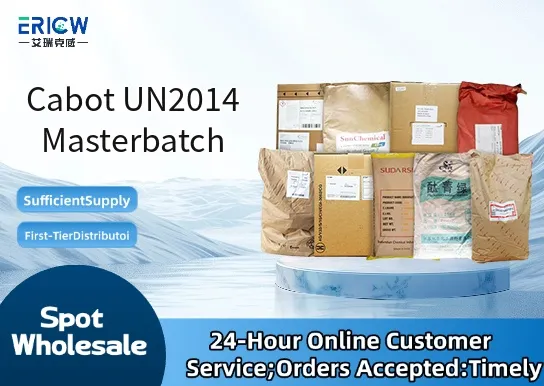
Highly concentrated carbon black dispersion for consistent color and performance.
Optimized for polyolefin (PP, PE) and engineering thermoplastic processing.
Low dust formulation with excellent flowability and handling safety.
Enhanced UV stabilization and long-term weather resistance in outdoor applications.
Reproducible rheology and minimal plate-out during extrusion and injection molding.
Automotive interior trim and exterior components.
Household appliances housings and functional parts.
Packaging films requiring high opacity and light barrier properties.
Outdoor furniture and construction profiles exposed to UV and moisture.
Industrial containers and material handling equipment.
| Chemical Type | Carbon black masterbatch |
| Product Form | Free-flowing granules |
| Appearance | Jet-black, uniform granules |
| Primary Applications | Polypropylene (PP), polyethylene (PE), ABS, and PC compounds |
| Key Features | High loading efficiency, low volatility, excellent dispersion |
| Benefits | Improved surface gloss, reduced pigment migration, enhanced mechanical integrity |
| Recommended Carrier Resin | PP homopolymer or copolymer |
| Storage Conditions | Store in dry, ventilated area at 5–30°C; keep sealed to prevent moisture absorption |
Q1: What is Cabot UN2014 Masterbatch primarily designed for?
A: Cabot UN2014 Masterbatch is a high-performance carbon black–based masterbatch engineered for use in polyolefin applications—especially polyethylene and polypropylene—where consistent jetness, excellent dispersion, and thermal stability during processing are critical, such as in thin-wall packaging, blow-molded containers, and technical films.
Q2: How does UN2014 differ from standard carbon black masterbatches?
A: UN2014 features a proprietary carrier-resin system and optimized carbon black surface treatment that enhances melt compatibility and reduces agglomeration risk during high-output extrusion or injection molding. This results in improved color uniformity, lower haze in translucent applications, and reduced filter pressure buildup compared to conventional masterbatches with similar loading levels.
Q3: What is the typical dosage range for Cabot UN2014 in polyolefin compounds?
A: Dosage depends on the target blackness level, substrate thickness, and processing conditions—but it is generally used at low concentrations, typically ranging from 0.1% to 2% by weight in the final compound. Optimal loading should be determined through application-specific trials to balance performance, cost, and rheological behavior.
Q4: Is Cabot UN2014 suitable for food-contact applications?
A: Cabot UN2014 is formulated using FDA-compliant raw materials and meets applicable regulatory requirements for indirect food contact when used in accordance with specified conditions of use and maximum loading limits. End-use compliance must be verified by the compounder or converter based on their full formulation and intended application.
Contact With Us:
E-mail: wangxingqiang@ericwchem.com
Have a Questions? Call Us:
Add:
Building A1, Jiete Industrial Park, Huangpu District, Guangzhou City, Guangdong Province, China