English
 Español
 tiếng việt
 русский
High thermal stability suitable for processing temperatures up to 800 °C.
Excellent lightfastness and weather resistance in outdoor applications.
Non-toxic, heavy-metal-free formulation compliant with global environmental regulations.
Superior dispersion performance in both aqueous and solvent-based systems.
Consistent chroma and hue batch-to-batch due to stringent manufacturing controls.
Ceramic glazes and underglaze colorants for architectural and tableware ceramics.
High-temperature coatings for industrial equipment and exhaust components.
Coloration of refractory materials including firebricks and kiln furniture.
Pigmentation of inorganic binders in construction mortars and façade renderings.
Specialty glass enamels requiring stable yellow tone under thermal cycling.
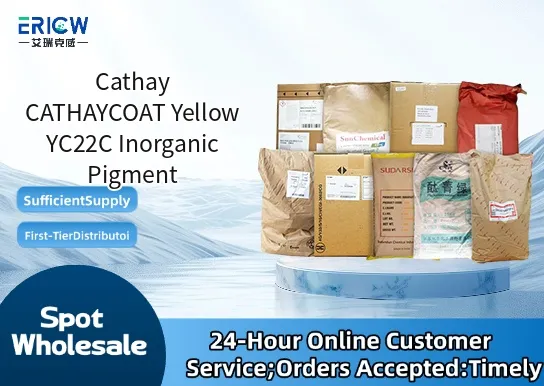
| Chemical Type | Mixed Metal Oxide (Zinc Iron Chromate) |
| Product Form | Fine Dry Powder |
| Appearance | Yellow to Yellow-Brown Free-Flowing Powder |
| Primary Applications | Ceramics, High-Temperature Coatings, Refractories, Glass Enamels |
| Key Features | Thermal Stability, UV Resistance, Chemical Inertness |
| Benefits | No blooming, minimal sintering shrinkage, low oil absorption |
| Storage Conditions | Keep in dry, cool, well-ventilated area away from moisture and direct sunlight |
| Regulatory Compliance | REACH Compliant; RoHS Directive 2011/65/EU Conformant |
Q1: What is the primary chemical composition of Cathay CATHAYCOAT Yellow YC22C?
A: YC22C is a high-performance inorganic yellow pigment based on a modified complex metal oxide system, engineered for thermal and chemical stability. Its exact composition is proprietary, but it contains no heavy metals such as lead, cadmium, or chromium(VI), aligning with modern regulatory expectations for industrial coatings.
Q2: Is YC22C suitable for high-temperature curing applications, such as coil coating or powder coating?
A: Yes — YC22C is specifically formulated to retain color integrity and dispersion stability under elevated processing temperatures, typically up to 250°C. It demonstrates excellent resistance to thermal degradation during baking cycles common in coil and powder coating systems.
Q3: How does YC22C perform in UV-exposed outdoor applications?
A: As an inorganic pigment, YC22C offers inherently strong UV stability and weather resistance. When properly incorporated into durable resin systems (e.g., polyester, fluoropolymer, or silicone-modified acrylics), it delivers long-term color retention and minimal chalking in exterior architectural and industrial coatings.
Q4: Can YC22C be used in water-based coating systems?
A: Yes — YC22C is surface-treated to ensure good compatibility and stable dispersion in both solvent-based and water-based industrial coating formulations, including acrylic and polyurethane dispersions. Optimal performance requires appropriate dispersant selection and standard milling procedures.
Q5: What is the typical dosage range for YC22C in finished coating formulations?
A: Dosage depends on the required opacity, hue strength, and application method, but YC22C is generally used at low concentrations — typically ranging from 0.1% to 2% by weight of the total formulation — due to its high tinting strength and efficient light absorption characteristics.
Contact With Us:
E-mail: wangxingqiang@ericwchem.com
Have a Questions? Call Us:
Add:
Building A1, Jiete Industrial Park, Huangpu District, Guangzhou City, Guangdong Province, China