English
 Español
 tiếng việt
 русский
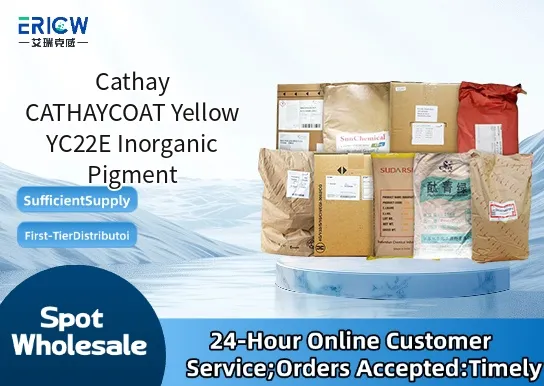
High thermal stability suitable for processing temperatures up to 800°C.
Excellent lightfastness and UV resistance, ensuring long-term color retention.
Non-toxic composition compliant with global regulatory standards including REACH and RoHS.
Superior chemical inertness, resistant to acids, alkalis, and solvents in demanding environments.
Consistent particle size distribution for uniform dispersion and optimal tinting strength.
Ceramic glazes and underglaze decorations requiring high-firing stability.
Architectural glass enamels for façade and safety glazing applications.
High-performance industrial coatings for automotive and aerospace components.
Colorants in refractory materials and fire-resistant construction products.
Pigmentation of specialty plastics processed at elevated temperatures.
| Chemical Type | Mixed Metal Oxide (Zinc Iron Chromite-based) |
| Product Form | Free-flowing fine powder |
| Appearance | Bright yellow granular powder |
| Primary Applications | Ceramics, glass enamels, high-temp coatings, refractories |
| Key Features | Heat stability, non-volatility, inorganic durability |
| Benefits | No blooming, no migration, minimal batch-to-batch variation |
| Density (g/cm³) | 4.8–5.2 |
| Particle Size (D50, μm) | 1.2–1.8 |
Q1: What is the primary chemical composition of Cathay CATHAYCOAT Yellow YC22E?
A: Cathay CATHAYCOAT Yellow YC22E is a high-performance inorganic yellow pigment based on a stabilized complex of iron oxide and hydrated oxides, engineered for thermal and chemical stability in demanding industrial applications.
Q2: Is YC22E suitable for use in heat-sensitive polymer systems such as polyolefins or PVC?
A: Yes — YC22E exhibits excellent thermal stability and is widely used in polyolefin compounds, rigid and flexible PVC, and other thermoplastic and thermoset systems processed at elevated temperatures, without significant color shift or degradation.
Q3: How does YC22E perform under UV exposure and outdoor weathering conditions?
A: As an inorganic pigment, YC22E delivers outstanding lightfastness and weather resistance, maintaining color integrity and opacity over extended periods in exterior applications, including architectural coatings and automotive refinishes.
Q4: Can YC22E be dispersed using standard industrial milling equipment?
A: Yes — YC22E is designed for efficient dispersion in both aqueous and solvent-based systems using conventional high-speed dispersers, bead mills, or three-roll mills. Optimal dispersion typically requires formulation-specific wetting agents and shear optimization.
Q5: What types of binder systems is YC22E compatible with?
A: YC22E demonstrates broad compatibility across acrylics, alkyds, epoxies, polyurethanes, and chlorinated rubber binders, making it suitable for protective coatings, industrial finishes, and general-purpose paints.
Contact With Us:
E-mail: wangxingqiang@ericwchem.com
Have a Questions? Call Us:
Add:
Building A1, Jiete Industrial Park, Huangpu District, Guangzhou City, Guangdong Province, China