English
 Español
 tiếng việt
 русский
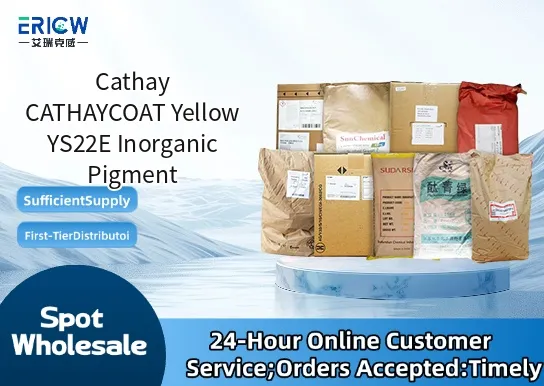
High thermal stability suitable for processing temperatures up to 800°C.
Excellent lightfastness and weather resistance in outdoor applications.
Low soluble salt content ensuring superior chemical resistance and reduced efflorescence risk.
Consistent particle size distribution for uniform dispersion and color strength.
Non-toxic, heavy-metal-free formulation compliant with global environmental regulations (RoHS, REACH).
Ceramic glazes and underglaze decorations.
Architectural coatings for façades and concrete finishes.
High-temperature industrial coatings for metal substrates.
Coloration of inorganic binders such as geopolymer cements.
Plastic masterbatches requiring heat stability during extrusion.
| Chemical Type | Mixed Metal Oxide (Iron-Zinc Chromite-based) |
| Product Form | Free-flowing dry powder |
| Appearance | Bright yellow granular powder |
| Primary Applications | Ceramics, architectural coatings, high-temp coatings, inorganic binders |
| Key Features | Thermal stability, UV resistance, alkali resistance, non-fading |
| Benefits | Color consistency, low migration, minimal impact on binder chemistry |
| pH (5% aqueous suspension) | 6.5–7.5 |
| Volatiles (105°C, 2 hrs) | <0.5 wt% |
Q1: What is the primary chemical composition of Cathay CATHAYCOAT Yellow YS22E?
A: YS22E is a high-performance inorganic yellow pigment based on a modified complex metal oxide system, engineered for thermal stability and chemical inertness in demanding industrial coating applications.
Q2: Is YS22E suitable for high-temperature curing processes, such as those used in coil coating or powder coating?
A: Yes — YS22E is specifically formulated to retain color integrity and dispersion stability at elevated processing temperatures, making it well-suited for both coil coating lines and thermoset powder coating systems.
Q3: How does YS22E compare to organic yellow pigments in terms of weather resistance and UV stability?
A: As an inorganic pigment, YS22E offers significantly superior resistance to UV degradation, chalking, and long-term color fade compared to conventional organic yellows — particularly in exterior architectural and industrial maintenance coatings.
Q4: Can YS22E be used in waterborne coating systems without compromising dispersion or gloss performance?
A: Yes — YS22E is surface-treated to ensure good compatibility and stable dispersion in both solvent-borne and modern waterborne acrylic and polyurethane systems, supporting consistent gloss and film uniformity.
Q5: What is the typical dosage range for optimal color strength and cost efficiency in industrial coatings?
A: Dosage depends on formulation requirements and desired opacity, but YS22E is typically used at low concentrations due to its high tinting strength — generally ranging from 0.1% to 2% by weight in finished coating systems.
Contact With Us:
E-mail: wangxingqiang@ericwchem.com
Have a Questions? Call Us:
Add:
Building A1, Jiete Industrial Park, Huangpu District, Guangzhou City, Guangdong Province, China