English
 Español
 tiếng việt
 русский
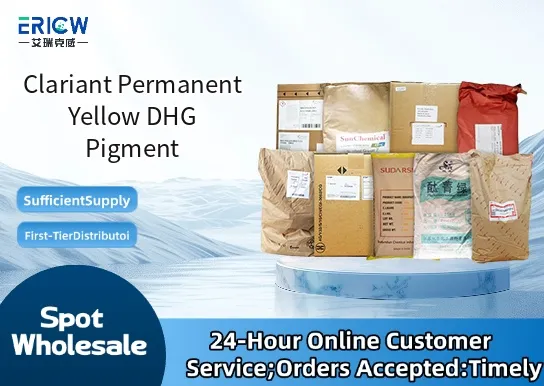
High thermal stability suitable for processing temperatures up to 280 °C.
Excellent lightfastness and weather resistance in demanding outdoor applications.
Good dispersibility in both polar and non-polar polymer systems.
Low migration tendency, ensuring color consistency in food-contact-compliant plastics.
Halogen-free formulation aligned with modern regulatory and sustainability requirements.
Polyolefin packaging films for consumer goods and agricultural mulch.
Automotive interior components including dashboards and trim parts.
Engineering plastics such as ABS and polycarbonate for durable housings and appliances.
Masterbatch production for high-performance colored compounds.
Food-grade plastic containers and caps requiring FDA-compliant colorants.
| Chemical Type | Azo pigment (disazo condensation type) |
| Product Form | Free-flowing powder |
| Appearance | Bright yellow powder with uniform particle size distribution |
| Primary Applications | Polyolefins, engineering thermoplastics, masterbatches |
| Key Features | Thermal stability, lightfastness, low volatility, halogen-free |
| Benefits | Consistent coloration, minimal plate-out, excellent batch-to-batch reproducibility |
| Regulatory Compliance | EU REACH registered; compliant with FDA 21 CFR §178.3297 for polyolefins |
| Recommended Processing | Extrusion, injection molding, blow molding |
Q1: What is the primary chemical class of Clariant Permanent Yellow DHG?
A: Clariant Permanent Yellow DHG is an organic pigment based on the monoazo pyridone chemical structure, offering strong tinting strength, excellent lightfastness, and good thermal stability for demanding industrial applications.
Q2: Is this pigment suitable for use in food-contact plastics?
A: Clariant Permanent Yellow DHG is not approved for direct food-contact applications under major global regulatory frameworks. It is intended for non-food-contact industrial plastics, coatings, and inks where high performance and color consistency are required.
Q3: How does DHG compare to other yellow pigments in terms of heat stability?
A: DHG demonstrates superior heat stability compared to many conventional monoazo yellows, maintaining color integrity during standard polyolefin processing (e.g., injection molding and extrusion) without significant shade shift or decomposition.
Q4: What dispersion methods are recommended for optimal performance in plastics?
A: For best results in polymer systems, pre-dispersed masterbatches or melt-compounding with high-shear mixing are recommended. The pigment exhibits good compatibility with polyolefins and PVC, and benefits from proper wetting and stabilization during compounding.
Contact With Us:
E-mail: wangxingqiang@ericwchem.com
Have a Questions? Call Us:
Add:
Building A1, Jiete Industrial Park, Huangpu District, Guangzhou City, Guangdong Province, China