English
 Español
 tiếng việt
 русский
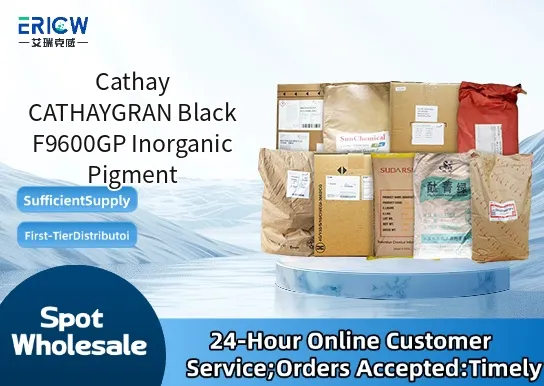
High thermal stability suitable for processing temperatures up to 800 °C.
Excellent UV resistance and long-term outdoor weatherability.
Non-toxic, heavy-metal-free formulation compliant with global environmental regulations (RoHS, REACH).
Superior dispersion performance in aqueous and solvent-based systems.
Consistent jet-black hue with high color strength and low chroma variation between batches.
Ceramic glazes and decorative tiles requiring high-firing stability.
Architectural concrete and precast concrete products.
High-performance coatings for industrial equipment and infrastructure.
Plastic compounds for automotive interior components.
Specialty inks for heat-resistant labeling and packaging.
| Chemical Type | Mixed Metal Oxide (Fe–Mn–Cr spinel structure) |
| Product Form | Fine dry powder |
| Appearance | Jet-black granular powder |
| Primary Applications | Ceramics, concrete, coatings, plastics, inks |
| Key Features | Heat resistant, lightfast, chemically inert, non-volatile |
| Benefits | Color consistency, low dosage requirement, minimal impact on matrix rheology |
| pH (10% aqueous slurry) | 6.5 – 7.5 |
| Particle Size (D50) | 0.8 – 1.2 µm |
Q1: What are the primary application areas for CATHAYGRAN Black F9600GP?
A: This high-performance inorganic black pigment is widely used in engineering thermoplastics—including polyamide (PA), polybutylene terephthalate (PBT), and polyphenylene sulfide (PPS)—where thermal stability, color consistency, and dispersion reliability are critical. It is also suitable for masterbatch production and select high-temperature coatings requiring inertness and UV resistance.
Q2: How does F9600GP compare to carbon black in high-heat polymer applications?
A: Unlike organic or carbon-based blacks, F9600GP offers superior thermal stability above 300 °C and eliminates concerns related to volatile organic compound (VOC) generation, blooming, or degradation-induced color shift during high-shear compounding or extended melt processing. Its inorganic nature also provides better chemical resistance and reduced impact on polymer mechanical properties.
Q3: What is the recommended dispersion method for optimal performance?
A: For best results, pre-mixing with carrier resin followed by twin-screw extrusion under controlled temperature and shear conditions is advised. The pigment exhibits good wettability in polar thermoplastics and typically achieves fine, uniform dispersion without requiring specialized surface treatments—though compatibility testing in final formulations is always recommended.
Q4: Is F9600GP suitable for food-contact or regulated polymer applications?
A: While F9600GP is an inorganic pigment with inherently low extractability, its suitability for food-contact applications depends on full formulation compliance and regulatory review by end-use authorities. It is not pre-certified for specific food-contact regulations; users must conduct full migration and safety assessments per applicable regional requirements.
Contact With Us:
E-mail: wangxingqiang@ericwchem.com
Have a Questions? Call Us:
Add:
Building A1, Jiete Industrial Park, Huangpu District, Guangzhou City, Guangdong Province, China