English
 Español
 tiếng việt
 русский
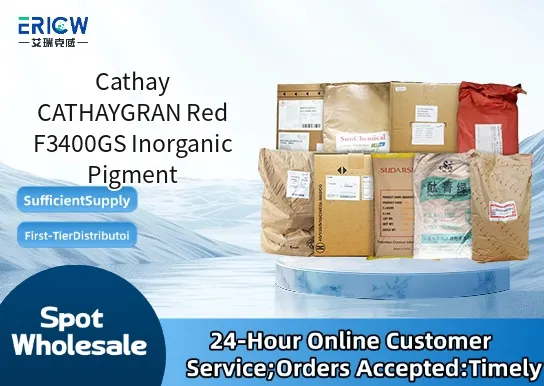
High thermal stability suitable for processing temperatures up to 800 °C
Excellent lightfastness and weather resistance in outdoor applications
Low soluble salt content ensuring superior chemical resistance and reduced corrosion risk
Consistent particle size distribution for uniform dispersion and color strength
Non-toxic formulation compliant with major global regulatory frameworks (RoHS, REACH)
Ceramic glazes and underglaze decorations
High-performance architectural coatings for façades and cladding
Coloration of vitreous enamels for appliances and sanitaryware
Pigmentation of refractory materials and heat-resistant mortars
Specialty inorganic pigments for glass batch compounding
| Chemical Type | Iron-based mixed metal oxide (Fe–Cr–Mn system) |
| Product Form | Fine dry powder |
| Appearance | Brilliant red granular powder |
| Primary Applications | Ceramics, enamels, refractories, architectural coatings |
| Key Features | Thermal stability, UV resistance, acid/alkali resistance |
| Benefits | Color consistency, low migration, long-term durability |
| Storage Conditions | Store in cool, dry place away from direct sunlight and moisture |
| Shelf Life | 24 months from date of manufacture under recommended conditions |
Q1: What is the primary chemical composition of CATHAYGRAN Red F3400GS?
A: CATHAYGRAN Red F3400GS is an iron oxide-based inorganic pigment, primarily composed of hematite (α-Fe₂O₃), engineered for high chroma, thermal stability, and UV resistance.
Q2: Is this pigment suitable for use in polyolefin compounds exposed to elevated processing temperatures?
A: Yes — F3400GS exhibits excellent thermal stability and is widely used in polypropylene and polyethylene masterbatches processed at temperatures up to 280 °C without significant hue shift or decomposition.
Q3: How does F3400GS perform in outdoor applications requiring long-term weather resistance?
A: As a fully inorganic oxide pigment, it delivers outstanding lightfastness and weatherability, making it well-suited for exterior plastic profiles, automotive trims, and architectural coatings where color retention under UV exposure is critical.
Q4: Can F3400GS be dispersed effectively in aqueous systems such as water-based paints or inks?
A: While optimized for polymer melt dispersion, F3400GS can be formulated into stable aqueous dispersions using appropriate surfactants and milling techniques; however, performance depends on pH control and particle surface treatment compatibility.
Q5: What are typical dosage levels when incorporating F3400GS into plastic masterbatches?
A: Dosage varies by desired opacity and shade intensity but generally ranges from 0.1% to 2% by weight in final polymer products, with most applications achieving target coloration at low-to-moderate concentrations.
Contact With Us:
E-mail: wangxingqiang@ericwchem.com
Have a Questions? Call Us:
Add:
Building A1, Jiete Industrial Park, Huangpu District, Guangzhou City, Guangdong Province, China