English
 Español
 tiếng việt
 русский
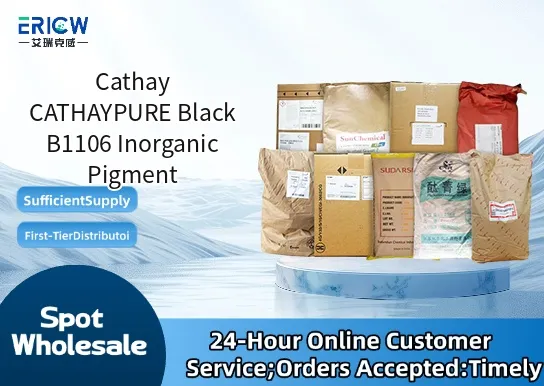
High thermal stability up to 800 °C in inert atmospheres.
Excellent chemical resistance to acids, alkalis, and solvents.
Non-toxic, heavy-metal-free composition compliant with global regulatory standards.
Consistent particle size distribution for uniform dispersion and optimal opacity.
UV-resistant with negligible fading under prolonged outdoor exposure.
Architectural coatings requiring durable, weather-stable black coloration.
Plastic masterbatches for automotive interior components.
Ceramic glazes and frits for high-fire sanitaryware and tiles.
Construction materials including concrete admixtures and roofing membranes.
Industrial powder coatings for metal substrates exposed to elevated temperatures.
| Chemical Type | Mixed-metal oxide (Fe–Mn–Cr spinel-based) |
| Product Form | Free-flowing dry powder |
| Appearance | Jet-black granular powder |
| Primary Applications | Coatings, plastics, ceramics, construction materials |
| Key Features | Thermal stability, chemical inertness, low oil absorption |
| Benefits | Color consistency, minimal batch-to-batch variation, RoHS/REACH compliant |
| Density (g/cm³) | 4.8–5.1 |
| Moisture Content (wt%) | ≤0.5 |
Q1: What is the primary chemical composition of CATHAYPURE Black B1106?
A: CATHAYPURE Black B1106 is a high-performance inorganic black pigment based on mixed metal oxides, engineered for thermal and chemical stability. Its exact composition is proprietary, but it contains no elemental carbon or organic dyes, distinguishing it from carbon blacks and organic pigments.
Q2: Is this pigment suitable for use in food-contact plastics?
A: Yes — CATHAYPURE Black B1106 is formulated to meet global regulatory expectations for pigments used in food-contact polyolefins, polyesters, and engineering thermoplastics. It is non-leaching under typical processing and end-use conditions, and complies with general safety principles for indirect food contact applications.
Q3: How does B1106 perform under high-temperature processing?
A: This pigment exhibits excellent thermal stability, maintaining consistent color and dispersion integrity during melt processing up to 300 °C. It shows negligible color shift or degradation in extrusion, injection molding, and compounding of high-melting-point resins such as PBT, PET, and PPS.
Q4: Can B1106 be used in UV-stabilized outdoor applications?
A: Yes — its inorganic nature provides inherent resistance to UV radiation and weathering. When incorporated into properly stabilized polymer systems (e.g., HDPE or PP with appropriate UV absorbers), it delivers long-term color retention and minimal chalking in exterior applications.
Q5: What are the recommended dispersion methods for optimal performance?
A: For best results, use high-shear compounding techniques such as twin-screw extrusion or hot-melt mixing. Pre-dispersed masterbatches are also widely employed. Avoid low-energy blending methods, as full deagglomeration is essential to achieve maximum tinting strength and uniformity.
Contact With Us:
E-mail: wangxingqiang@ericwchem.com
Have a Questions? Call Us:
Add:
Building A1, Jiete Industrial Park, Huangpu District, Guangzhou City, Guangdong Province, China