English
 Español
 tiếng việt
 русский
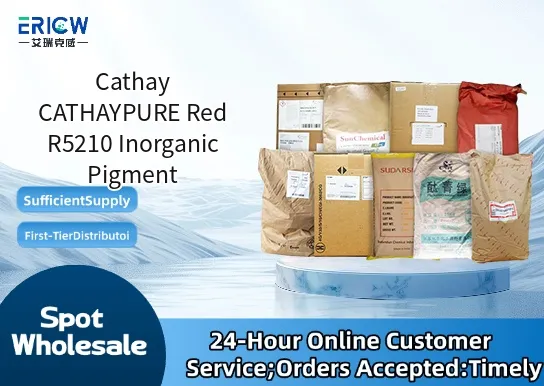
High thermal stability up to 800 °C, enabling use in high-temperature ceramic and enamel applications.
Excellent lightfastness and weather resistance, maintaining color integrity under prolonged UV exposure.
Non-toxic composition compliant with global regulatory standards including EN 71-3 and RoHS.
Superior dispersion performance in aqueous and solvent-based systems without requiring surface treatment.
Consistent particle size distribution ensuring uniform color strength and minimal batch-to-batch variation.
Ceramic glazes and frits for tableware, sanitaryware, and architectural tiles.
High-performance enamels for domestic appliances and industrial metal coatings.
Colorants in refractory materials and heat-resistant concrete formulations.
Pigmentation of inorganic binders used in artistic and decorative mortars.
Stabilized red hue in glass batch compositions for container and flat glass manufacturing.
| Chemical Type | Iron–Manganese–Chromium spinel (complex inorganic colored pigment) |
| Product Form | Fine dry powder |
| Appearance | Deep brick-red free-flowing powder |
| Primary Applications | Ceramics, enamels, refractories, glass, and inorganic construction materials |
| Key Features | Thermally stable, chemically inert, non-volatile, acid/alkali resistant |
| Benefits | No color migration, no blooming, low oil absorption, low dust generation |
| Heavy Metals Compliance | Meets EU REACH Annex XVII and US CPSIA limits |
| Storage Conditions | Store in cool, dry, well-ventilated area away from direct sunlight and moisture |
Q1: What is the primary chemical composition of CATHAYPURE Red R5210?
A: CATHAYPURE Red R5210 is a high-performance inorganic red pigment based on an iron oxide–modified spinel structure, engineered for thermal and chemical stability in demanding industrial applications.
Q2: Is this pigment suitable for use in food-contact plastics or coatings?
A: CATHAYPURE Red R5210 is designed for general industrial applications and is not certified for direct food-contact use. Customers requiring compliance with food safety regulations must conduct full regulatory evaluation and validation per their target market requirements.
Q3: How does R5210 perform under high-temperature processing conditions?
A: This pigment exhibits excellent thermal stability, maintaining color integrity and dispersion performance during standard polymer processing operations including injection molding, extrusion, and calendering at temperatures up to 300°C.
Q4: Can R5210 be used in water-based systems such as architectural paints or ink formulations?
A: Yes — R5210 is compatible with both solvent-based and water-based systems when properly dispersed using recommended surfactants and milling techniques. Its surface treatment supports stable suspension in aqueous media without significant flocculation.
Q5: What is the typical dosage range for optimal color development in polyolefin applications?
A: Dosage depends on formulation requirements and desired opacity, but R5210 is typically used at low concentrations — generally ranging from 0.1% to 2% by weight — to achieve strong red tones with good UV resistance and minimal impact on mechanical properties.
Contact With Us:
E-mail: wangxingqiang@ericwchem.com
Have a Questions? Call Us:
Add:
Building A1, Jiete Industrial Park, Huangpu District, Guangzhou City, Guangdong Province, China