English
 Español
 tiếng việt
 русский
High thermal stability suitable for processing temperatures up to 800°C.
Excellent lightfastness and weather resistance in outdoor applications.
Non-toxic formulation compliant with RoHS and REACH regulatory requirements.
Superior dispersion performance in aqueous and solvent-based systems.
Consistent chroma and hue batch-to-batch due to stringent quality control.
Ceramic glazes and frits for architectural tiles and sanitaryware.
High-performance coatings for industrial equipment and metal substrates.
Coloration of inorganic construction materials including concrete and mortar.
Plastic colorants for engineering thermoplastics requiring heat stability.
Specialty glass coloring for automotive and architectural glazing.
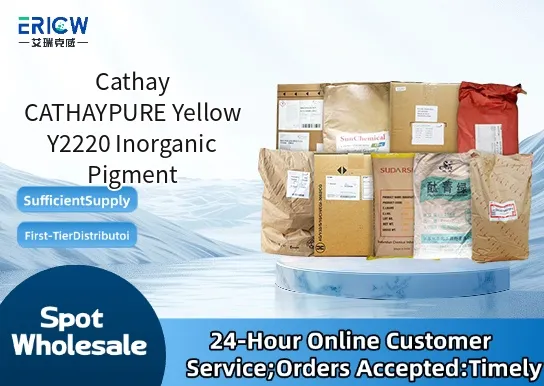
| Chemical Type | Mixed-metal oxide (lead-free, chromium-based) |
| Product Form | Free-flowing fine powder |
| Appearance | Bright yellow granular powder |
| Primary Applications | Ceramics, coatings, plastics, construction materials, glass |
| Key Features | Heat stable, UV resistant, chemically inert, non-volatile |
| Benefits | Low dosage requirement, excellent opacity, minimal bleeding |
| Storage Conditions | Store in dry, cool, well-ventilated area away from moisture and strong oxidizers |
| Regulatory Compliance | RoHS Directive 2011/65/EU, REACH SVHC-free, ISO 9001 certified manufacturing |
Q1: What is the primary chemical composition of Cathay CATHAYPURE Yellow Y2220?
A: Cathay CATHAYPURE Yellow Y2220 is a high-performance inorganic yellow pigment based on modified iron oxide and complex metal oxides, engineered for enhanced thermal stability and lightfastness without organic chromophores.
Q2: Is this pigment suitable for food-contact plastics and coatings?
A: Yes — Y2220 is formulated to meet general requirements for pigments used in food-contact applications, including compliance with major global regulatory frameworks for non-toxicity and extractable metal limits. Final regulatory acceptance depends on the complete formulation and end-use conditions.
Q3: How does Y2220 perform under high-temperature processing conditions?
A: This pigment exhibits excellent thermal stability, maintaining consistent color and dispersion integrity during standard polymer processing such as injection molding, extrusion, and calendering up to 280°C, with minimal risk of charring or hue shift.
Q4: What is the typical dosage range for optimal coloration in polyolefin applications?
A: Dosage depends on the desired shade intensity and base resin opacity, but Y2220 is typically used at low concentrations — generally ranging from 0.1% to 2% by weight — due to its high tinting strength and efficient dispersion characteristics.
Contact With Us:
E-mail: wangxingqiang@ericwchem.com
Have a Questions? Call Us:
Add:
Building A1, Jiete Industrial Park, Huangpu District, Guangzhou City, Guangdong Province, China