English
 Español
 tiếng việt
 русский
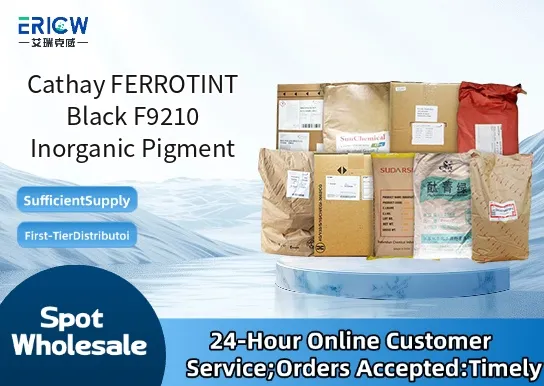
Highly stable iron oxide-based black pigment with excellent thermal and chemical resistance.
Consistent particle size distribution ensuring uniform dispersion and optimal color strength.
Low oil absorption for improved formulation efficiency in solvent-based and water-based systems.
Non-toxic, heavy metal-free composition compliant with global regulatory standards including RoHS and REACH.
Superior lightfastness and weather resistance, maintaining color integrity under prolonged UV exposure.
Architectural and industrial coatings requiring durable, fade-resistant black shades.
Concrete and cement-based products including paving slabs, precast elements, and terrazzo.
Plastics processing for outdoor applications such as automotive trim and construction profiles.
Ceramic glazes and underglaze colorants where high-temperature stability is critical.
Printing inks for packaging and security applications demanding consistent opacity and batch-to-batch reproducibility.
| Chemical Type | Iron Oxide (Fe₃O₄ / γ-Fe₂O₃ hybrid) |
| Product Form | Fine dry powder |
| Appearance | Jet-black free-flowing powder |
| Primary Applications | Coatings, construction materials, plastics, ceramics, inks |
| Key Features | Heat-stable, non-bleeding, low volatility, pH-neutral |
| Benefits | Enhanced opacity, minimal dust generation, easy wetting and dispersion |
| Storage Conditions | Store in cool, dry, well-ventilated area away from moisture and direct sunlight |
| Regulatory Compliance | REACH registered; RoHS compliant; ISO 9001 certified manufacturing |
Q1: What is the primary chemical composition of Cathay FERROTINT Black F9210?
A: Cathay FERROTINT Black F9210 is a high-performance inorganic black pigment based on complex iron oxide–manganese oxide spinel structures, engineered for thermal and chemical stability in demanding industrial applications.
Q2: Is this pigment suitable for use in food-contact plastics or coatings?
A: While F9210 complies with general safety requirements for inorganic pigments in non-food-contact applications, it is not pre-qualified for direct food-contact use under major global regulatory frameworks. Customers requiring food-contact compliance must conduct full formulation-specific migration testing and obtain regulatory approval prior to use.
Q3: How does F9210 compare to carbon black in terms of UV resistance and dispersion behavior?
A: Unlike organic or carbon-based blacks, F9210 exhibits excellent inherent UV stability and does not degrade under prolonged sunlight exposure. Its inorganic nature also provides superior heat resistance, though dispersion may require tailored surfactants or milling protocols depending on the polymer matrix or binder system.
Q4: What types of resins or polymers is F9210 commonly used with?
A: F9210 demonstrates broad compatibility with thermoplastics such as polyolefins (PP, PE), engineering resins (PA, PBT), and PVC, as well as with solvent- and water-based coating systems including alkyds, acrylics, and epoxy formulations.
Q5: What is the typical dosage range when using F9210 in plastic coloration?
A: Dosage depends on the desired shade depth and opacity, but F9210 is typically used at low concentrations—generally ranging from 0.1% to 2% by weight—in most polymer applications.
Contact With Us:
E-mail: wangxingqiang@ericwchem.com
Have a Questions? Call Us:
Add:
Building A1, Jiete Industrial Park, Huangpu District, Guangzhou City, Guangdong Province, China