English
 Español
 tiếng việt
 русский
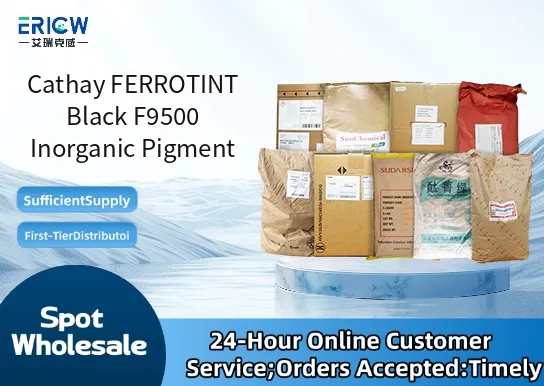
High thermal stability up to 600 °C, suitable for high-temperature processing and firing applications.
Excellent lightfastness and weather resistance, ensuring long-term color retention under UV exposure.
Non-toxic and heavy-metal-free formulation compliant with REACH and RoHS directives.
Superior dispersion performance in aqueous and solvent-based systems without requiring surface treatment.
Consistent particle size distribution for uniform black shade and optimal hiding power.
Ceramic glazes and underglaze decorations for tableware and architectural tiles.
High-performance architectural coatings requiring durable exterior black pigmentation.
Plastic coloration for engineering thermoplastics including polypropylene and polyester.
Specialty inks for packaging and industrial printing where heat resistance is critical.
Colored concrete and cementitious products for façade and decorative precast elements.
| Chemical Type | Complex iron oxide-based spinel (Fe-Mn-Cr mixed oxide) |
| Product Form | Free-flowing fine powder |
| Appearance | Jet-black granular powder with matte finish |
| Primary Applications | Ceramics, architectural coatings, plastics, inks, construction materials |
| Key Features | Thermal stability, UV resistance, chemical inertness, low oil absorption |
| Benefits | No blooming, non-bleeding, excellent batch-to-batch consistency |
| pH (10% aqueous slurry) | 6.8–7.4 |
| Volatile Content (105 °C, 2 h) | ≤ 0.5 wt% |
Q1: What is the primary chemical composition of Cathay FERROTINT Black F9500?
A: Cathay FERROTINT Black F9500 is an iron oxide-based inorganic black pigment, primarily composed of magnetite (Fe₃O₄) with controlled crystallinity and surface characteristics optimized for dispersion stability and color strength in demanding applications.
Q2: Is F9500 suitable for use in food-contact plastics or coatings?
A: F9500 is designed for industrial and general-purpose applications where regulatory compliance for direct food contact is not required. It is not pre-qualified for food-contact use under major global frameworks unless specifically reformulated and validated by the end-user’s regulatory team.
Q3: How does F9500 compare to carbon black in terms of UV stability and heat resistance?
A: As an inorganic iron oxide pigment, F9500 offers superior inherent UV stability and thermal resistance compared to organic or carbon-based blacks — it remains stable under prolonged exposure to sunlight and retains integrity at processing temperatures commonly encountered in thermoplastics and powder coating curing cycles.
Q4: What are the recommended dispersion methods for optimal performance in solvent-based systems?
A: For solvent-based coatings and inks, high-shear mixing or bead milling is recommended to achieve full deagglomeration. Pre-wetting with compatible solvents or low-HLB surfactants may improve dispersion efficiency and reduce viscosity buildup during incorporation.
Q5: Can F9500 be used in waterborne formulations without significant settling or flocculation?
A: Yes — F9500 can be successfully incorporated into waterborne systems when paired with appropriate dispersants and pH stabilization. Its surface-treated grade variant shows improved compatibility, but formulation optimization is advised to ensure long-term colloidal stability and rheological control.
Contact With Us:
E-mail: wangxingqiang@ericwchem.com
Have a Questions? Call Us:
Add:
Building A1, Jiete Industrial Park, Huangpu District, Guangzhou City, Guangdong Province, China