English
 Español
 tiếng việt
 русский
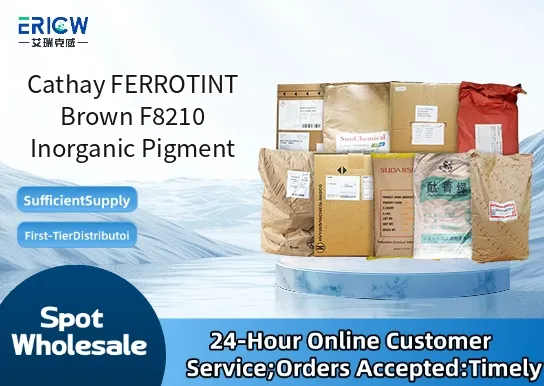
High thermal stability up to 800 °C, suitable for high-temperature ceramic and refractory applications.
Excellent lightfastness and weather resistance, ensuring long-term color retention in outdoor exposure.
Non-toxic, heavy-metal-free formulation compliant with global regulatory standards including EN 71-3 and RoHS.
Consistent particle size distribution for uniform dispersion and optimal tinting strength in diverse matrices.
Chemically inert and pH-stable across acidic to alkaline environments (pH 4–11).
Ceramic glazes and underglaze decorations for tableware and architectural tiles.
High-performance architectural coatings and façade paints requiring UV and alkali resistance.
Coloration of concrete, mortar, and precast concrete products.
Plastic masterbatches for outdoor applications including construction profiles and garden furniture.
Specialty inks for industrial marking and heat-resistant labeling.
| Chemical Type | Complex iron oxide-based inorganic pigment (Fe₂O₃–MnO–ZnO system) |
| Product Form | Free-flowing dry powder |
| Appearance | Uniform reddish-brown powder with no visible grit or agglomerates |
| Primary Applications | Ceramics, architectural coatings, concrete, plastics, inks |
| Key Features | Heat resistant, lightfast, non-toxic, alkali stable |
| Benefits | Color consistency, low dosage requirement, minimal impact on matrix properties |
| Density (g/cm³) | 4.8–5.2 |
| Moisture Content (% w/w) | ≤0.5 |
Q1: What is the primary chemical composition of Cathay FERROTINT Brown F8210?
A: Cathay FERROTINT Brown F8210 is a complex inorganic pigment based on mixed iron oxides and hydroxides, engineered to deliver consistent brown hue, high thermal stability, and excellent lightfastness typical of high-performance iron oxide pigments.
Q2: Is this pigment suitable for use in high-temperature polymer processing, such as polypropylene or engineering thermoplastics?
A: Yes — F8210 exhibits excellent thermal stability and is widely used in thermoplastic compounds processed at temperatures up to 280 °C, including PP, PE, and certain engineering resins. Its inorganic nature ensures minimal color shift or degradation under standard melt-processing conditions.
Q3: How does F8210 compare to organic brown pigments in terms of weather resistance and UV stability?
A: As an inorganic pigment, F8210 offers significantly superior UV resistance, chalking resistance, and long-term outdoor durability compared to most organic browns. It is commonly selected for exterior applications where sustained color retention under sunlight and atmospheric exposure is critical.
Q4: Can F8210 be dispersed effectively in water-based systems such as architectural paints or coatings?
A: Yes — with appropriate surfactant selection and dispersion protocols, F8210 achieves stable, uniform dispersion in aqueous media. Its surface chemistry supports compatibility with common acrylic, vinyl acetate, and styrene-acrylic emulsion systems used in interior and exterior architectural coatings.
Contact With Us:
E-mail: wangxingqiang@ericwchem.com
Have a Questions? Call Us:
Add:
Building A1, Jiete Industrial Park, Huangpu District, Guangzhou City, Guangdong Province, China