English
 Español
 tiếng việt
 русский
High thermal stability up to 1000 °C, enabling use in high-temperature ceramic and refractory applications.
Excellent chemical resistance against acids, alkalis, and solvents, ensuring long-term color integrity in aggressive environments.
Non-toxic, heavy-metal-free composition compliant with global regulatory standards including REACH and RoHS.
Consistent particle size distribution for uniform dispersion and optimal opacity in demanding matrix systems.
Outstanding UV and lightfastness performance, preventing fading under prolonged outdoor exposure.
Ceramic glazes and bodies for tableware, sanitaryware, and architectural tiles.
High-performance refractory coatings used in metallurgical linings and furnace components.
Colorants for specialty concrete, terrazzo, and precast architectural elements.
Pigmentation of inorganic binders such as sodium silicate and phosphate-based cements.
Functional coloring agent in fire-resistant building materials and intumescent coatings.
| Chemical Type | Complex mixed-metal oxide (Fe–Cr–Ni spinel) |
| Product Form | Fine free-flowing powder |
| Appearance | Dark green to black granular powder |
| Primary Applications | Ceramics, refractories, architectural concrete, inorganic coatings |
| Key Features | Thermal stability, chemical inertness, non-volatility, non-hygroscopic |
| Benefits | Color consistency at high firing temperatures, low batch-to-batch variation, no efflorescence |
| Storage Conditions | Store in dry, cool, well-ventilated area; protect from moisture and contamination |
| Regulatory Compliance | REACH registered, RoHS compliant, EU food-contact safe for indirect applications (EU No. 10/2011 Annex I) |
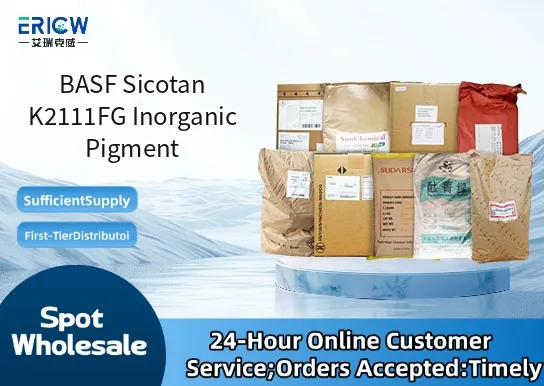
Q1: What is the primary chemical composition and pigment type of Sicotan K2111FG?
A: Sicotan K2111FG is a high-performance inorganic pigment based on a modified titanium dioxide–silica composite system, engineered to deliver exceptional whiteness, brightness, and UV stability without relying on organic chromophores.
Q2: Is Sicotan K2111FG suitable for use in food-contact plastics or coatings?
A: Yes — it is designed for applications requiring regulatory compliance in food-contact materials, including plastics and protective coatings. Its inorganic nature ensures excellent migration resistance and thermal stability during processing, though final compliance must be verified per regional regulations and specific end-use conditions.
Q3: How does Sicotan K2111FG compare to conventional titanium dioxide pigments in terms of dispersion and processing behavior?
A: Sicotan K2111FG features a surface-treated morphology that enhances wetting and dispersion in both polar and non-polar polymer matrices. It typically requires less energy input during compounding and shows improved compatibility with common dispersants compared to unmodified TiO₂ grades.
Q4: What are the recommended storage and handling conditions to maintain optimal performance?
A: Store in a cool, dry environment in original sealed packaging to prevent moisture uptake and contamination. Avoid exposure to high humidity or direct sunlight. Standard industrial handling practices for fine inorganic powders apply — use appropriate dust control measures during transfer and dosing.
Contact With Us:
E-mail: wangxingqiang@ericwchem.com
Have a Questions? Call Us:
Add:
Building A1, Jiete Industrial Park, Huangpu District, Guangzhou City, Guangdong Province, China