English
 Español
 tiếng việt
 русский
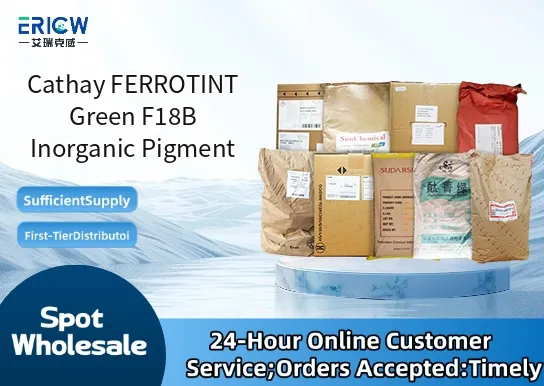
High thermal stability up to 700 °C, suitable for high-temperature processing applications.
Excellent lightfastness and weather resistance, maintaining color integrity under prolonged UV exposure.
Non-toxic, heavy-metal-free formulation compliant with global regulatory standards including EN 71-3 and RoHS.
Superior dispersion performance in aqueous and solvent-based systems without requiring specialized surfactants.
Consistent batch-to-batch color reproducibility ensured by stringent in-process quality control.
Ceramic glazes and frits for architectural tiles and tableware.
High-performance coatings for industrial equipment and exterior building facades.
Coloration of refractory materials including firebricks and kiln furniture.
Pigmentation of glass enamels and low-melting-point decorative glasses.
Functional fillers in heat-resistant plastics and polymer composites.
| Chemical Type | Complex mixed-metal oxide (Cr–Fe–Ni spinel structure) |
| Product Form | Free-flowing fine powder |
| Appearance | Olive-green to forest-green granular powder |
| Primary Applications | Ceramics, refractories, architectural coatings, glass enamels |
| Key Features | Thermal stability, UV resistance, chemical inertness, non-volatility |
| Benefits | No blooming, no migration, low oil absorption, minimal impact on matrix rheology |
| pH (10% aqueous slurry) | 6.5–7.5 |
| Specific Gravity | 4.2–4.5 g/cm³ |
Q1: What are the key advantages of Cathay FERROTINT Green F18B compared to organic green pigments?
A: FERROTINT Green F18B offers superior thermal stability, excellent lightfastness, and high resistance to weathering and chemical exposure—making it especially suitable for demanding industrial coatings, plastics processing, and outdoor applications where organic greens may degrade or fade.
Q2: Is this pigment suitable for use in food-contact plastics or packaging inks?
A: While FERROTINT Green F18B is an inorganic pigment with inherently low solubility and migration potential, its suitability for food-contact applications depends on full compliance with regional regulatory requirements and final formulation validation. Users must conduct appropriate migration testing and consult local regulatory authorities before use in such applications.
Q3: How does F18B perform in high-temperature polymer processing, such as polypropylene or engineering thermoplastics?
A: As a robust inorganic oxide-based pigment, F18B demonstrates excellent thermal stability and retains its color integrity during standard melt processing of polyolefins and many engineering resins—typically up to 280°C without significant hue shift or decomposition.
Q4: What dispersion methods are recommended for optimal color development in liquid systems?
A: For paints, inks, and liquid coatings, high-shear dispersion using bead mills or high-speed dispersers is recommended. Pre-wetting with compatible surfactants or dispersing agents helps achieve uniform particle distribution and maximizes tinting strength and gloss consistency.
Q5: Can F18B be used in combination with other inorganic pigments like iron oxides or titanium dioxide?
A: Yes—FERROTINT Green F18B exhibits good compatibility with common inorganic pigments including iron oxides, chromium oxide greens, and titanium dioxide. It shows minimal reactivity in typical coating and plastic formulations, supporting stable color blends and extended shelf life.
Contact With Us:
E-mail: wangxingqiang@ericwchem.com
Have a Questions? Call Us:
Add:
Building A1, Jiete Industrial Park, Huangpu District, Guangzhou City, Guangdong Province, China